
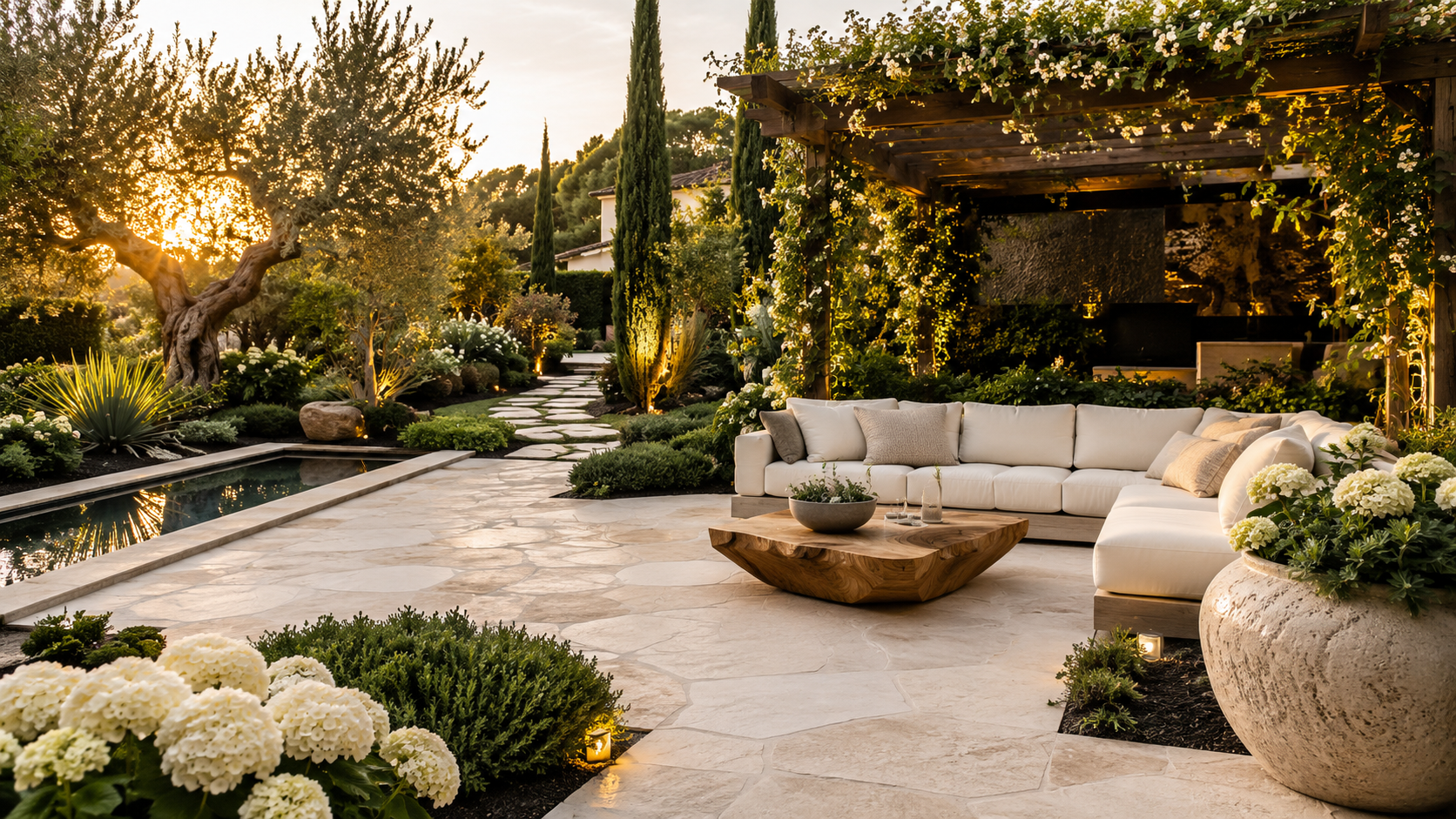
12 Stunning Luxury Garden Decor Ideas You’ll Want to Copy
A garden can contain expensive furniture, beautiful plants, and freshly installed paving yet still feel unfinished. The problem is rarely the price of the individual pieces. More often, it is the lack of connection between them.
Perhaps the seating area feels exposed. The plants look attractive during spring but disappear visually in winter. Lighting illuminates the entire yard with one harsh floodlight. Decorative objects have been added without considering scale, weather, or how people actually move through the space.
A genuinely luxurious garden feels different. It has a clear layout, comfortable places to pause, balanced planting, practical shade, and materials that become more attractive as they age. Nothing looks randomly placed. Even a compact courtyard can feel high-end when every feature has a purpose.
The best luxury garden decor ideas are not limited to swimming pools, enormous lawns, or costly construction. A well-positioned bench beneath a tree may feel more indulgent than an oversized outdoor sectional sitting in direct afternoon sun. A small recirculating fountain can create more atmosphere than an elaborate water installation that is difficult to maintain.
The secret is to design the garden as an outdoor extension of the home. Colors should relate to the architecture. Furniture must suit the available space. Plants should provide structure in every season rather than delivering one short burst of color. Lighting should reveal texture and guide movement instead of making the yard as bright as a parking lot.
The following 12 stunning luxury garden decor ideas combine visual beauty with comfort, durability, maintenance planning, and realistic budgets. Some require professional installation, while others can be introduced gradually over several weekends. Each one can be adapted to suit a suburban backyard, city courtyard, spacious estate, or modest patio.
Five Quick Ways to Make a Garden Look More Luxurious
- Simplify the color palette. Choose one neutral foundation and two or three plant colors instead of mixing every shade available.
- Repeat materials. Use the same stone, timber, metal finish, or planter style in several areas to make the garden feel coordinated.
- Create one strong focal point. A sculptural tree, fountain, fire feature, or beautifully styled dining area gives the eye somewhere to rest.
- Hide practical clutter. Conceal hoses, bins, tools, pool equipment, and outdoor toys inside ventilated storage or behind planting.
- Install layered lighting. Combine path lights, uplights, step lights, and soft task lighting rather than relying on one powerful fixture.
Frequently Asked Questions About Luxury Garden Design
What makes a garden look luxurious?
A garden looks luxurious when its layout, materials, planting, furniture, and lighting feel intentional. Clear zones, healthy structural plants, comfortable seating, restrained colors, hidden utilities, and well-maintained surfaces matter more than excessive decoration. Luxury is created through consistency, comfort, proportion, and attention to small details.
How can I make my garden look expensive on a limited budget?
Begin with maintenance, decluttering, edging, and a simple color scheme. Paint mismatched fences, repeat a small number of plants, add large planters, improve furniture cushions, and install warm landscape lighting. Concentrating money on one focal area usually produces a better result than spreading inexpensive accessories throughout the yard.
Which materials are best for a luxury outdoor space?
Natural stone, porcelain pavers, brick, powder-coated aluminum, stainless steel, sustainably sourced hardwood, concrete, and high-quality outdoor fabrics are dependable options. The right material depends on climate, drainage, maintenance expectations, and architectural style. Slip resistance and weather durability should always be considered before appearance alone.
What colors work best in a luxury garden?
Warm white, charcoal, taupe, sand, olive, forest green, muted blue, and natural wood tones provide a timeless foundation. Planting can introduce controlled accents such as white, lavender, blush, burgundy, or soft yellow. Repeating a limited palette usually creates a more sophisticated result than using many unrelated colors.
How much does a luxury garden makeover cost?
A cosmetic update with planters, cushions, lighting, and planting may cost $1,500 to $7,500. A professionally designed mid-range garden can cost $15,000 to $60,000. Large projects involving grading, masonry, mature trees, kitchens, pools, irrigation, or custom structures can exceed $100,000.
Create a Refined Outdoor Living Room
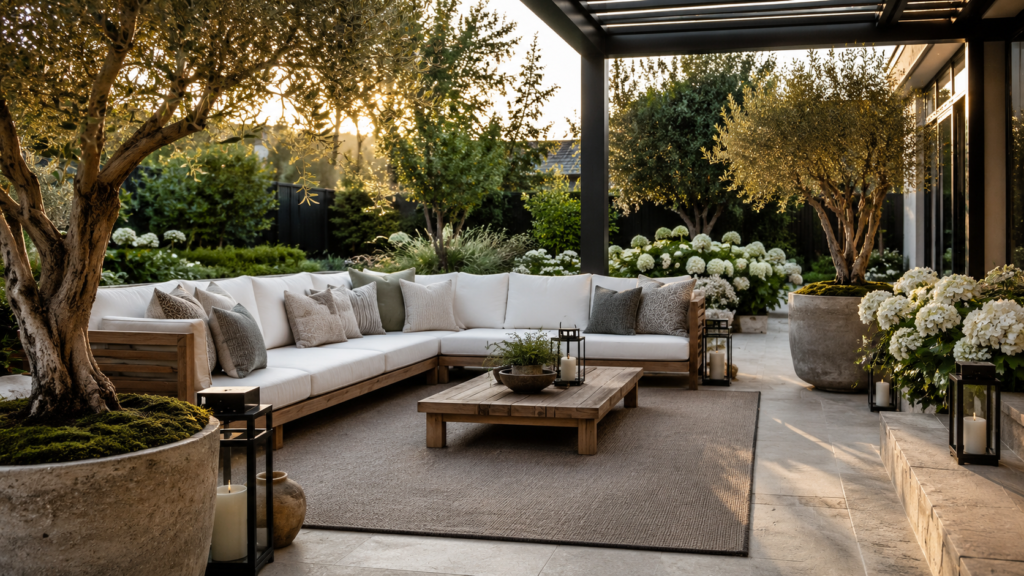
Purpose: Create a relaxing area for conversation, reading, and entertaining.
Why It Works: Indoor-style comfort makes the garden feel usable rather than purely decorative.
Key Features:
- Deep, weather-resistant seating
- A properly sized coffee table
- Outdoor-rated rug
- Side tables and soft lighting
- Planting that provides partial enclosure
Choose furniture according to the patio, not the showroom. Leave approximately 30 to 36 inches for main walkways and around 18 inches between seating and the coffee table. Powder-coated aluminum works well in wet climates, while teak is durable when homeowners accept its natural silver-gray patina.
Use solution-dyed acrylic or olefin fabrics because ordinary indoor cushions can retain moisture and develop mildew. A large outdoor rug should sit beneath the front legs of all major seating pieces. Small floating rugs often make the arrangement appear disconnected.
Many designers place taller planting behind the sofa and lower planting near the open side. This creates a protected feeling without blocking views.
Best For: Medium and large patios, pool gardens, and sheltered courtyards.
Designer Tip: Position seating to face the most attractive view, not automatically toward the house.
Common Mistake to Avoid: Buying an oversized sectional that restricts circulation. Measure the patio and mark the furniture footprint before ordering.
Maintenance Level: Medium. Cushions require seasonal cleaning and protected winter storage in harsh climates.
Estimated Budget: $2,500–$12,000.
Add a Sculptural Pergola with Adjustable Shade
Purpose: Provide shade and define an outdoor dining or lounge zone.
Why It Works: Overhead structure makes an open patio feel like a furnished room.
Key Features:
- Timber or powder-coated metal frame
- Slatted, retractable, or louvered roof
- Integrated lighting
- Weather-resistant furniture
- Optional climbing plants or curtains
A traditional cedar pergola creates warmth and suits transitional, Mediterranean, and cottage-style homes. Aluminum designs deliver sharper lines and require less refinishing. Adjustable louvered roofs offer better rain and sun control but cost considerably more than fixed timber structures.
Check the sun direction before choosing the roof orientation. Closely spaced slats can still provide disappointing shade when installed without considering the afternoon sun angle. In hot regions, retractable fabric or operable louvers may be more practical.
Keep climbing plants to one or two sides so the structure does not become dark or difficult to maintain. Star jasmine, climbing roses, grapevine, and clematis are beautiful where climate and growing conditions permit.
Best For: Sunny patios, outdoor dining spaces, and large open lawns.
Designer Tip: Match the pergola’s lines or finish to window frames, roof details, or exterior trim.
Common Mistake to Avoid: Installing a decorative pergola that provides almost no useful shade. Plan according to sun exposure first.
Maintenance Level: Low for aluminum; medium to high for timber and dense climbing plants.
Estimated Budget: $4,000–$35,000.
Design a Layered Evergreen Privacy Border
Purpose: Screen neighboring properties, roads, or unattractive views.
Why It Works: Several plant heights create depth, year-round structure, and a more natural boundary.
Key Features:
- Tall trees or upright evergreens
- Medium flowering or evergreen shrubs
- Low perennials and grasses
- Drip irrigation or efficient watering
- Correct spacing for mature growth
The back layer may include arborvitae, holly, yew, magnolia, podocarpus, or other regionally suitable trees. The middle layer can contain hydrangeas, viburnum, pittosporum, camellias, or roses. Low grasses, lavender, salvia, groundcovers, and seasonal bulbs soften the front edge.
Current landscape guidance emphasizes adequate spacing because overcrowded privacy planting can reduce airflow and create long-term health problems. Mature trees also give gardens a sense of permanence, but preserving healthy existing specimens is often more valuable than replacing them with smaller decorative plants.
Consult a local nursery or landscape professional before choosing varieties. Soil, winter temperatures, salt exposure, rainfall, deer pressure, and mature width all influence success.
Best For: Suburban yards, corner lots, pools, and exposed seating areas.
Designer Tip: Mix foliage shapes rather than using one continuous row of identical trees.
Common Mistake to Avoid: Planting for immediate density and ignoring mature size. Overcrowded plants become thin, diseased, or difficult to prune.
Maintenance Level: Medium, depending on pruning and irrigation requirements.
Estimated Budget: $2,000–$20,000.
Introduce a Quiet Reflecting Pool or Fountain
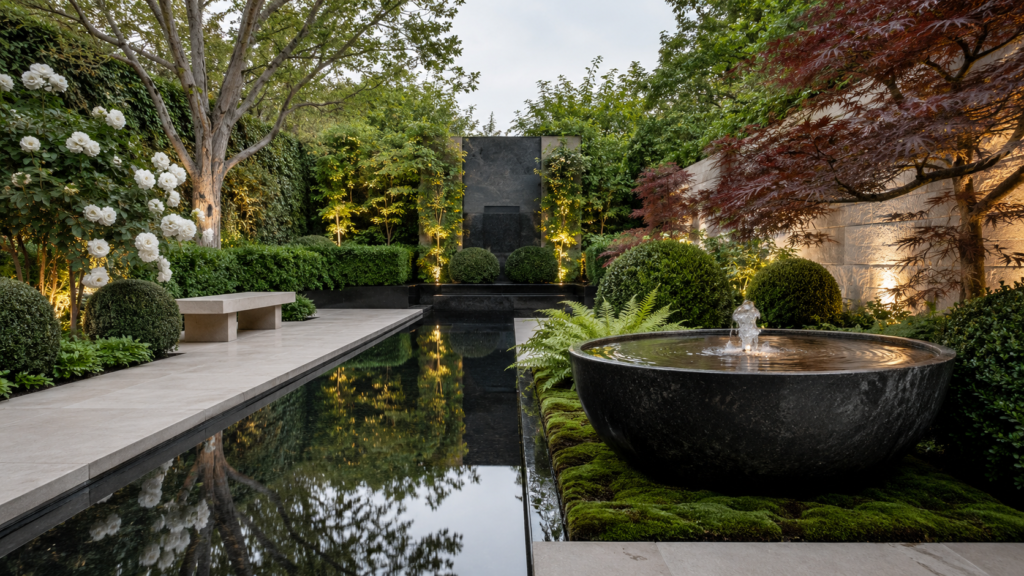
Purpose: Add atmosphere, mask background noise, and create visual focus.
Why It Works: Water reflects plants and sky while gentle sound makes the garden feel calmer.
Key Features:
- Recirculating pump
- Accessible electrical supply
- Stable, level base
- Removable filter or pump access
- Child- and wildlife-conscious design
A freestanding fountain is the simplest option because it does not require major excavation. A narrow reflecting pool provides a cleaner architectural look but needs careful leveling and regular surface cleaning. In compact gardens, a wall-mounted spout flowing into a basin can provide sound without occupying valuable floor space.
Locate water features away from trees that drop heavy leaves or fruit. The pump should be accessible without draining or dismantling the entire structure. In freezing climates, confirm whether the unit must be drained and covered during winter.
Choose a water sound appropriate to the setting. A gentle bubble suits a quiet courtyard, while a stronger cascade can help soften traffic noise.
Best For: Courtyards, formal gardens, meditation areas, and urban backyards.
Designer Tip: Use dark interior finishes to strengthen reflections and visually deepen shallow water.
Common Mistake to Avoid: Selecting a feature for appearance without checking pump noise, splash distance, or maintenance access.
Maintenance Level: Medium to high, depending on water volume, climate, and surrounding trees.
Estimated Budget: $500–$15,000.
Build an Elegant Garden Dining Terrace
Purpose: Create a comfortable location for meals, celebrations, and outdoor entertaining.
Why It Works: A defined dining zone gives the landscape a clear social function.
Key Features:
- Level, slip-resistant surface
- Durable dining table
- Comfortable chairs
- Shade during dining hours
- Nearby lighting and serving access
Allow at least 36 inches behind dining chairs, with additional clearance where people regularly pass. A 10-by-12-foot area can accommodate many six-person arrangements, although larger rectangular tables require more space.
Place the terrace reasonably close to the kitchen. Carrying dishes across wet grass, steps, or a distant garden quickly becomes inconvenient. Porcelain pavers are stain resistant and consistent in size, while natural stone offers character but may need sealing. Ensure the selected surface is exterior rated and suitably slip resistant.
One thing that always improves outdoor dining is a lighting plan that illuminates the tabletop without shining directly into guests’ eyes. Overhead pendants, pergola lights, wall fixtures, or rechargeable table lamps can work well.
Best For: Families, frequent hosts, and gardens connected to kitchens or family rooms.
Designer Tip: Choose chairs for comfort first. Guests will remain outside longer when the seat depth and back support are appropriate.
Common Mistake to Avoid: Placing the table in full afternoon sun without shade or airflow.
Maintenance Level: Low to medium.
Estimated Budget: $3,000–$20,000.
Use Oversized Planters as Architectural Accents
Purpose: Frame entrances, define zones, introduce height, and add flexible planting.
Why It Works: Fewer large containers generally create a stronger visual statement than many small mismatched pots.
Key Features:
- Frost-resistant or climate-appropriate containers
- Drainage holes
- Lightweight filler where suitable
- Quality potting mix
- Irrigation or consistent watering plan
Use pairs to frame doors, steps, or garden paths. A group of three containers with different heights works well beside a lounge area. Fiberglass and fiberstone can imitate concrete or stone while reducing weight, which is helpful on decks and roof terraces.
Plants must suit the container’s volume and local exposure. Small trees, clipped evergreens, hydrangeas, grasses, agapanthus, citrus, and seasonal annuals are common choices. Check mature root requirements before planting permanent specimens.
Avoid filling an entire deep planter with expensive soil when the selected plant does not require it. Manufacturer-approved inserts can reduce weight and soil volume, but adequate root depth and drainage remain essential.
Best For: Entrances, courtyards, balconies, patios, and rental properties.
Designer Tip: Repeat the planter finish at least twice so it looks connected to the overall scheme.
Common Mistake to Avoid: Choosing undersized containers that dry out quickly and look out of proportion beside large walls or doors.
Maintenance Level: Medium because containers require more frequent watering than ground planting.
Estimated Budget: $600–$6,000.
Create a Destination Garden Bench
Purpose: Add a quiet place for reading, reflection, or enjoying a different garden view.
Why It Works: A distant seat creates depth and gives pathways a meaningful destination.
Key Features:
- Stable, level base
- Weather-resistant bench
- Comfortable back and arm height
- Shade or seasonal protection
- Attractive view in both directions
Teak, powder-coated metal, stone, and durable recycled composite benches are widely available. Place the bench on compacted gravel, paving, or a small foundation rather than directly on soil, where legs may sink or remain wet.
Current outdoor furniture coverage highlights benches as useful solutions for gardens, dining arrangements, and compact outdoor spaces. Their smaller footprint makes them easier to integrate than another full seating group.
Study the view from the seat before committing. The bench should face planting, water, sculpture, or an attractive portion of the house. It should also look inviting when viewed from the main patio.
Best For: Long gardens, side yards, woodland edges, and quiet corners.
Designer Tip: Surround the bench with fragrant plants, but keep thorny or bee-heavy varieties away from immediate contact areas.
Common Mistake to Avoid: Treating the bench as decoration and placing it where the ground is damp, uneven, or uncomfortable.
Maintenance Level: Low to medium.
Estimated Budget: $400–$4,000.
Add a Sophisticated Fire Feature
Purpose: Provide warmth, atmosphere, and a central location for evening conversation.
Why It Works: Fire creates movement and encourages circular or conversational furniture arrangements.
Key Features:
- Gas, propane, or wood-burning system
- Noncombustible base
- Manufacturer-required clearances
- Wind-conscious placement
- Safe fuel storage and shutoff access
Gas fire tables offer convenience and cleaner operation. Wood-burning fire pits provide aroma and stronger traditional atmosphere but create smoke, ash, and more maintenance. Local rules may restrict open flames, especially in drought-prone or densely populated regions.
Select seating that can be repositioned according to wind direction. Avoid placing cushions, overhanging branches, pergola fabric, or dry planting too close to the flame. A licensed professional should install permanent gas lines.
For a polished look, coordinate the fire feature with paving or retaining-wall materials rather than introducing an unrelated finish.
Best For: Entertaining gardens, cool climates, and spacious patios.
Designer Tip: Build the layout around comfortable conversation distance, not merely the dimensions of the fire unit.
Common Mistake to Avoid: Ignoring safety clearances and wind patterns for the sake of a compact arrangement.
Maintenance Level: Low for gas; medium for wood-burning designs.
Estimated Budget: $1,000–$15,000.
Install Layered Landscape Lighting
Purpose: Improve safety, extend evening use, and reveal important landscape features.
Why It Works: Different light levels create depth and prevent the yard from looking flat or overexposed.
Key Features:
- Path and step lighting
- Uplighting for trees
- Downlighting where appropriate
- Task lighting near cooking and dining areas
- Timers, dimmers, or smart controls
Use warm light, typically around 2700K to 3000K, for seating and planting unless the architecture calls for a cooler appearance. Fixtures should remain discreet during the day. The goal is to see the landscape, not a continuous row of exposed lamps.
Uplight a limited number of attractive trees, textured walls, or architectural plants. Downlighting from a mature tree can imitate soft moonlight when installed responsibly. Bright floodlights should be reserved for temporary security needs rather than everyday atmosphere.
Outdoor electrical work must meet local codes, and connections should be suitable for wet locations.
Best For: Every garden size, especially spaces used after dark.
Designer Tip: Illuminate transitions, steps, and destinations first; decorative lighting comes afterward.
Common Mistake to Avoid: Using too many fixtures at equal brightness. The result feels commercial and removes natural shadows.
Maintenance Level: Low, with occasional lens cleaning and plant trimming.
Estimated Budget: $1,500–$12,000.
Introduce a Curved Garden Path
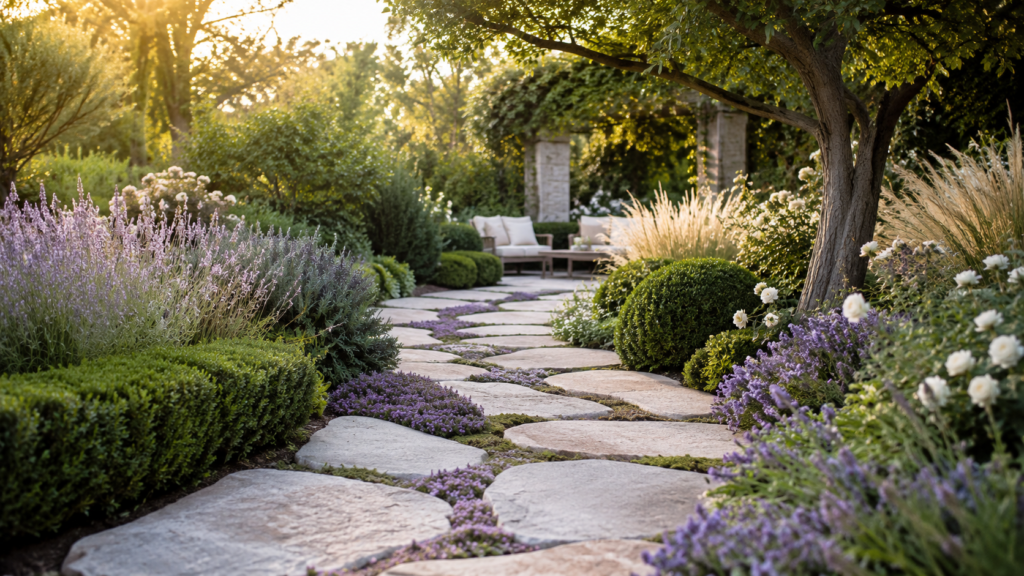
Purpose: Connect garden zones and create a sense of discovery.
Why It Works: A subtle curve slows the eye and allows planting or focal points to unfold gradually.
Key Features:
- Durable, slip-resistant surface
- Comfortable walking width
- Proper drainage
- Clear destination
- Planting that softens the edges
Main paths should generally be wide enough for comfortable movement, while secondary paths can be narrower. The exact width depends on whether people need to walk side by side, carry serving trays, or move equipment.
Gravel is affordable and permeable but requires strong edging. Brick provides warmth and suits traditional homes. Natural stone offers individual character, while exterior porcelain creates a more uniform modern finish.
Do not add curves without purpose. An unnatural winding path across an open lawn can feel forced. Use a tree, garden bed, fountain, or change in elevation to justify the direction.
Best For: Long yards, side gardens, cottage landscapes, and properties with several outdoor zones.
Designer Tip: Place a focal object or partial view near the bend to encourage movement.
Common Mistake to Avoid: Creating tight curves that are inconvenient for walking, wheelbarrows, strollers, or maintenance equipment.
Maintenance Level: Low to medium, depending on surface and weed control.
Estimated Budget: $2,000–$18,000.
Style an Outdoor Kitchen with Concealed Storage
Purpose: Reduce trips indoors and support outdoor cooking and entertaining.
Why It Works: Cooking, preparation, serving, and storage remain organized within one zone.
Key Features:
- Exterior-rated appliances
- Heat- and stain-resistant counter
- Ventilation and clearances
- Weatherproof cabinetry
- Task lighting and accessible utilities
Place the grill where smoke will not blow directly into seating areas or through open windows. Provide useful landing space on both sides of the cooking area. Stainless steel, marine-grade polymer, masonry, powder-coated metal, porcelain, and sintered stone are commonly used because they tolerate outdoor conditions better than ordinary indoor cabinetry and countertops.
Include drawers for tools, closed storage for serving pieces, and a bin for waste. A sink is convenient but adds plumbing and winterization requirements.
The kitchen should complement the house instead of resembling a freestanding appliance display. Repeat exterior wall colors, stone, timber, or metal finishes.
Best For: Frequent entertainers and households that cook outdoors regularly.
Designer Tip: Spend on the worktop, grill area, and storage before adding optional appliances.
Common Mistake to Avoid: Installing an elaborate kitchen without protection from sun, rain, grease, and seasonal weather.
Maintenance Level: Medium.
Estimated Budget: $8,000–$50,000 or more.
Create a Formal Focal Point with Sculpture or Topiary
Purpose: Establish visual direction and give the garden a memorable signature.
Why It Works: The eye naturally seeks a destination; a single well-scaled feature provides order.
Key Features:
- Garden sculpture, urn, specimen tree, or topiary
- Stable foundation
- Restrained surrounding planting
- Clear view from important windows or paths
- Material that suits the architecture
The focal feature does not need to be ornate. A multi-stem tree, large stone vessel, steel sculpture, or pair of clipped evergreens can provide enough presence. The most important consideration is scale. A tiny ornament disappears in a broad lawn, while an oversized statue can overwhelm a small courtyard.
View the proposed position from interior windows, the patio, and the garden entrance. A strong feature can connect indoor and outdoor sightlines throughout the year.
Limit competing accessories around it. Luxury gardens usually feel edited, not crowded.
Best For: Formal gardens, entry courtyards, long paths, and symmetrical landscapes.
Designer Tip: Use planting as a frame, leaving enough negative space for the feature to remain visible.
Common Mistake to Avoid: Adding several unrelated sculptures, signs, ornaments, and decorative objects in the same view.
Maintenance Level: Low for sculpture; medium for clipped topiary.
Estimated Budget: $500–$12,000.
Professional Advice for Planning a Luxury Garden
Start with the Layout
Before choosing furniture or plants, identify how the garden needs to function. Common zones include dining, lounging, cooking, play, storage, planting, and circulation.
Draw the garden to scale and mark doors, windows, utilities, slopes, drains, trees, afternoon shade, and unattractive views. This simple step prevents expensive mistakes such as placing a dining terrace too far from the kitchen or installing a fire feature beneath overhanging branches.
Avoid dividing a modest garden into too many tiny sections. Two generous, comfortable areas usually feel more luxurious than five cramped zones.
Use Lighting to Build Depth
A strong lighting plan includes several layers:
- Safety lighting for steps, paths, and level changes
- Task lighting for cooking and dining
- Accent lighting for trees, sculptures, and textured walls
- Ambient lighting for comfortable conversation
Outdoor lighting should direct light where it is needed and reduce unnecessary glare. Test fixture positions after dark before permanently installing the entire system.
Respect Scale
Scale is one of the clearest differences between a polished garden and a cluttered one. Large houses generally need broader planting beds, stronger trees, and more substantial furniture. Compact courtyards benefit from fewer objects with clean proportions.
This does not mean every feature must be large. It means each item should relate to its surroundings. Oversized planters may balance tall doors, while a slim wall fountain may suit a narrow courtyard better than a freestanding basin.
Balance Structure and Softness
Hard landscaping provides structure, but too much paving can feel hot and severe. Planting brings movement and softness, yet excessive unstructured growth may overwhelm paths and seating.
Combine clear edges with relaxed foliage. A geometric patio can be softened with grasses and flowering perennials. A romantic garden benefits from a crisp path, clipped hedge, or defined lawn edge.
Build Color Harmony
Select colors from the house before planning the garden palette. Brick, stone, roofing, window frames, and exterior paint already establish a foundation.
For a calm luxury garden, use:
- One dominant foliage color
- One neutral material family
- One main flower color
- One or two supporting accents
White flowers brighten shaded areas. Lavender and blue often create a relaxed atmosphere. Burgundy foliage adds depth, while yellow and orange produce energy. Repetition is more important than the exact color selected.
Choosing the Right Luxury Garden Ideas for Your Home
The best garden is not necessarily the one with the most features. It is the one that supports your daily life.
For frequent entertaining, begin with a comfortable outdoor living room, dining pavilion, and reliable lighting. For privacy, invest first in layered planting and carefully positioned structures. For relaxation, a bench beneath a tree, a hidden garden room, or a modest water feature may provide more enjoyment than a large entertaining terrace.
Small gardens benefit from strong editing. Choose one focal point, one seating zone, and a consistent material palette. Larger landscapes need clearer pathways and separate destinations so they do not feel empty.
Most importantly, consider what the garden will look like after five or ten years. Plants will mature, stone will weather, furniture finishes will age, and maintenance needs will become part of everyday life. Materials that age gracefully and plants suited to their environment often provide better long-term value than designs created only for immediate visual impact.
A truly luxurious garden should encourage you to step outside, slow down, and enjoy your home in a different way. When beauty, comfort, practicality, and nature are balanced carefully, even a simple backyard can become a place that feels deeply personal and worth returning to every day.