8 Kitchen Decorating Theme Ideas for Every Home
A Kitchen Decorating can be perfectly functional and still feel like it has no personality. The cabinets may be in good shape, the appliances may work, and the counters may be clean, but the room can still feel unfinished. Sometimes the problem is not the layout. It is that the kitchen does not have a clear decorating theme.
A good Kitchen Decorating theme does not mean filling the room with signs, matching jars, or trendy objects. It means choosing a design direction that helps every decision feel connected. Cabinet color, lighting, hardware, backsplash, stools, storage, and small decor should all feel like they belong in the same story.
That is why kitchen decorating theme ideas are so helpful. They give you a starting point. Instead of guessing whether brass hardware, oak shelves, black pendants, sage cabinets, or marble-look counters will work together, you can build around a theme that matches your home and lifestyle.
The best Kitchen Decorating themes are not just pretty. They make the kitchen easier to use, easier to clean, warmer to live in, and more valuable over time. A modern neutral kitchen can calm a busy open-plan home. A farmhouse kitchen can make a family space feel welcoming. A Japandi kitchen can reduce visual clutter. A Mediterranean kitchen can bring warmth and character. A coastal kitchen can brighten a small room.
These 8 kitchen decorating theme ideas for every home are designed for real kitchens, not impossible showrooms. Each idea uses materials, colors, furniture, and accessories that are available today and practical for everyday life.
Quick Wins for Choosing a Kitchen Decorating
- Pick one main mood first. Decide if you want your Kitchen Decorating to feel warm, airy, cozy, dramatic, modern, rustic, or relaxed.
- Choose one metal finish. Start with one dominant finish such as brass, matte black, bronze, chrome, or polished nickel.
- Repeat your wood tone. Match or coordinate your shelves, stools, cutting boards, flooring, or cabinet accents.
- Limit your color palette. Use one main color, one support color, and one accent color.
- Style counters lightly. A bowl, tray, plant, cookbook, or lamp can look beautiful, but too many items make the theme feel messy.
Featured Snippet Questions
What is a kitchen decorating theme?
A kitchen decorating theme is the overall design style that connects the room’s colors, materials, lighting, furniture, hardware, and accessories. It helps the Kitchen Decorating feel intentional instead of random. Popular kitchen themes include modern neutral, farmhouse, Japandi, coastal, Mediterranean, industrial, vintage, and organic modern.
Which Kitchen Decorating is best for small homes?
Small homes usually benefit from light, simple kitchen themes such as warm modern, Japandi, coastal, or soft neutral. These styles use cleaner lines, lighter colors, hidden storage, and less visual clutter. A small kitchen can still have personality, but the design should avoid too many dark colors or busy patterns.
How do I choose a Kitchen Decorating?
Start with your home’s architecture, natural light, cabinet condition, flooring, and lifestyle. If you cook often, choose durable materials and practical storage. If your Kitchen Decorating opens to the living room, choose a theme that connects with nearby furniture. Then select colors, hardware, lighting, and decor that support that direction.
Can I mix kitchen decorating themes?
Yes, but mix carefully. A kitchen can blend modern and farmhouse, coastal and classic, or Japandi and organic modern. The key is repeating materials and colors. For example, oak cabinets, cream tile, and black hardware can connect different styles without making the kitchen feel chaotic.
What Kitchen Decorating themes are timeless?
Warm modern, classic white, natural wood, transitional, soft farmhouse, and organic neutral kitchens tend to age well because they use practical materials and balanced color palettes. Timeless kitchens usually avoid extreme colors on expensive fixed features and use decor, stools, rugs, and accessories for easier updates.
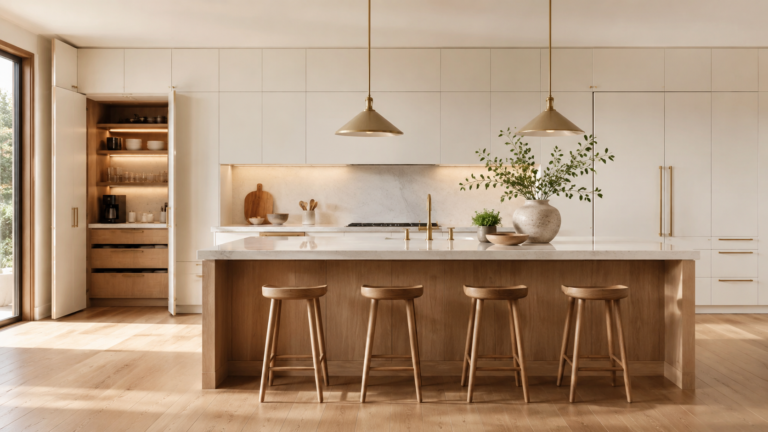
Warm Modern Kitchen Theme
Purpose:
To create a clean, stylish Kitchen Decorating that feels modern but still warm and welcoming.
Why It Works:
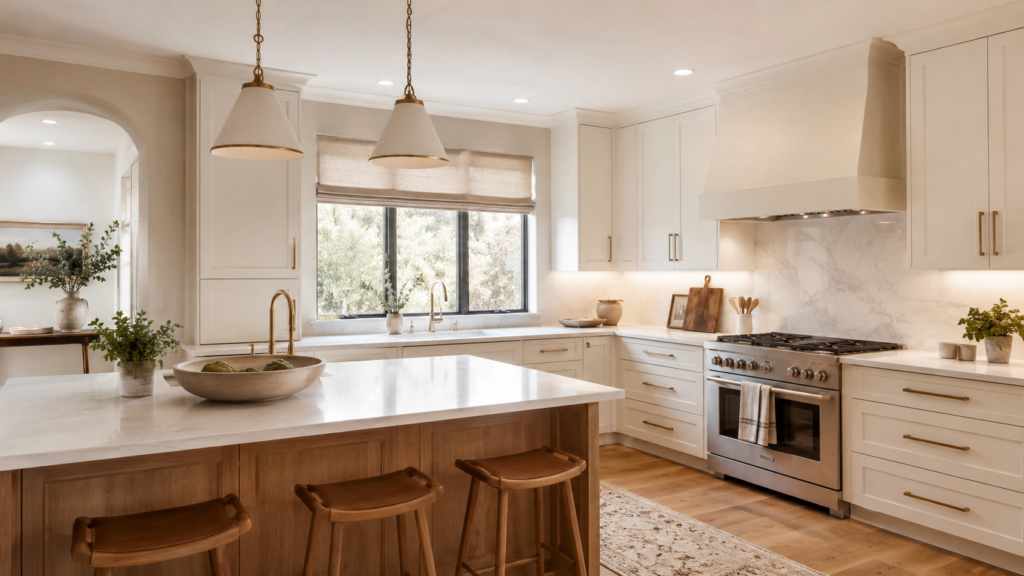
Warm modern kitchens are popular because they avoid the cold feeling of older all-white designs. Creamy cabinets, oak, quartz, soft lighting, and simple hardware create a space that feels fresh but not sterile.
Key Features:
- Cream, taupe, or warm white cabinets
- Oak or walnut accents
- Quartz countertops
- Simple pendant lighting
- Minimal but soft decor
Detailed Explanation:
This theme works in almost every home because it is flexible. In a small kitchen, use warm white cabinets and light oak to keep the space bright. In a larger kitchen, add a deeper wood island or darker hardware for contrast.
Good color combinations include cream with oak, greige with walnut, taupe with white quartz, or warm white with matte black accents. For lighting, use pendants over the island, recessed ceiling lights, and under-cabinet lighting for prep areas.
Recommended materials include quartz, porcelain tile, ceramic tile, sealed wood, and brushed metal hardware. Keep accessories simple: one tray, a ceramic vase, a wood cutting board, and maybe a small plant.
Best For:
Open-plan homes, small kitchens, modern family homes, and homeowners who want a fresh but timeless style.
Designer Tip:
Designers often warm up modern kitchens with wood because it softens flat cabinet lines and makes the room feel more comfortable.
Common Mistake To Avoid:
Do not make the Kitchen Decorating too plain. If everything is smooth and white, the room can feel unfinished. Add wood grain, warm lighting, texture, and a few natural accessories.
Maintenance Level:
Low Maintenance. Quartz counters, simple cabinetry, and minimal decor are easy to clean.
Estimated Budget (USD):
$500–$3,000 for styling, lighting, and hardware updates. $15,000–$60,000+ for cabinet, counter, and island upgrades.
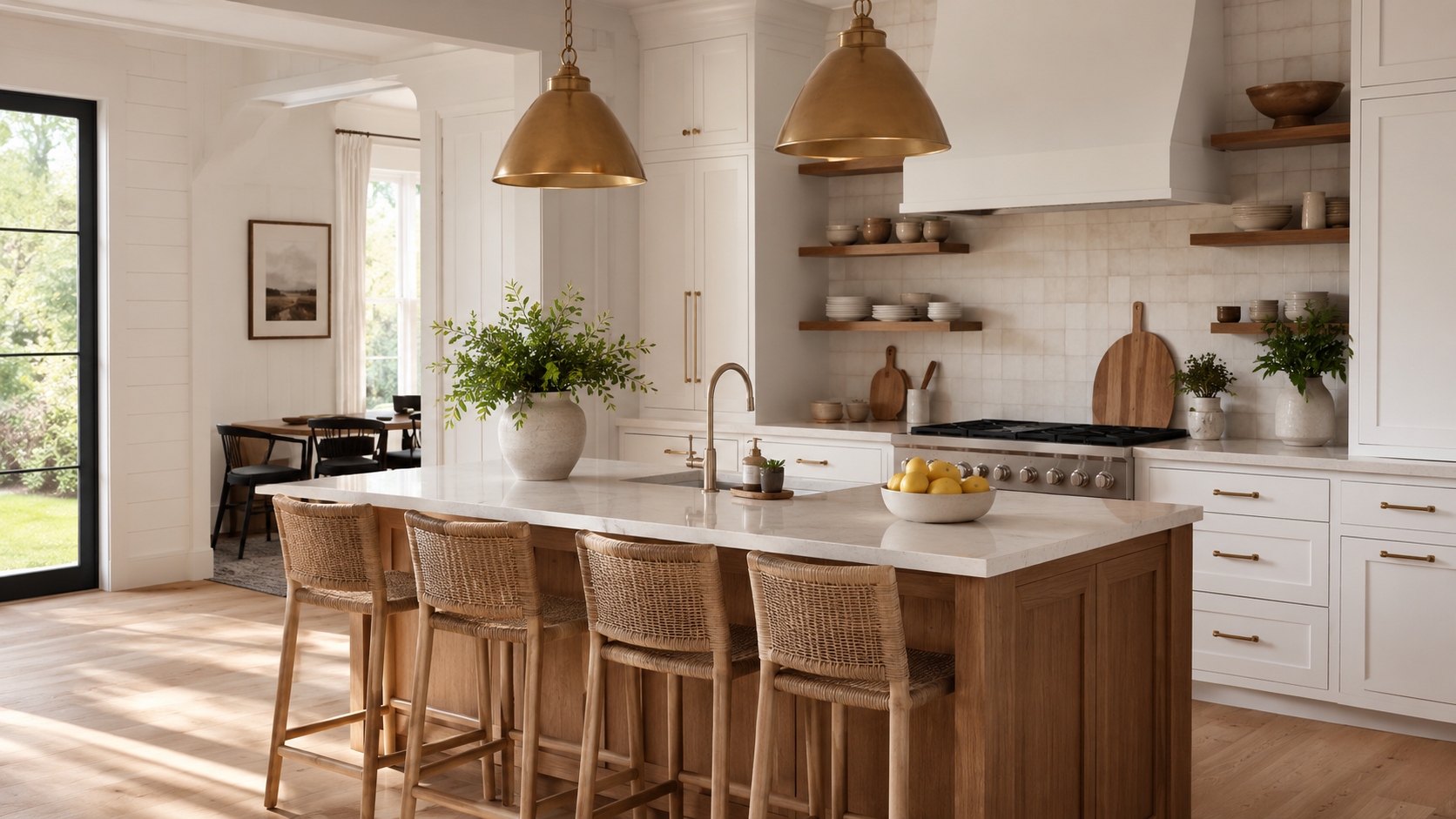
Organic Wood and Stone Kitchen Decorating Theme
Purpose:
To create a kitchen that feels grounded, natural, and quietly luxurious.
Why It Works:
Wood and stone are classic materials that bring depth to the kitchen. They make the room feel warmer, more tactile, and more connected to nature.
Key Features:
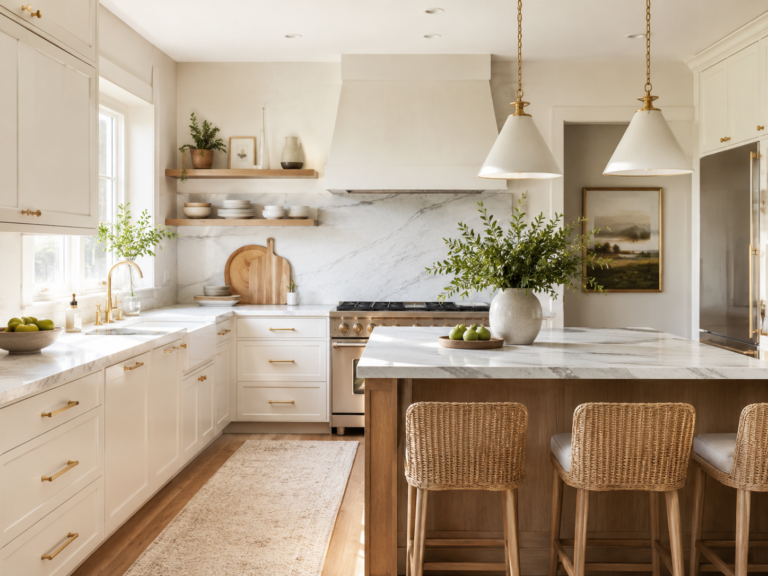
- Natural wood cabinets or shelves
- Stone or stone-look countertops
- Earthy neutral colors
- Woven stools or baskets
- Ceramic and linen accessories
Detailed Explanation:
This theme works beautifully in homes where the kitchen feels too cold or builder-grade. Use white oak for a lighter organic look, walnut for richer luxury, or maple for a softer natural style. Pair the wood with quartz, granite, quartzite-look surfaces, or porcelain stone-look tile.
Color combinations can include walnut with cream, oak with sage, maple with warm white, or dark wood with soft stone gray. Lighting should be warm and layered so the wood grain looks rich instead of dull.
Decor should feel useful: wood boards, ceramic bowls, woven baskets, linen towels, and herb pots. Avoid overfilling counters. The theme is about natural calm, not rustic clutter.
Best For:
Nature-inspired homes, modern organic interiors, warm neutral kitchens, and larger kitchens needing softness.
Designer Tip:
Many designers pair wood with stone because one material feels warm and the other feels polished. Together, they create balance.
Common Mistake To Avoid:
Do not mix too many wood tones. Choose one dominant wood tone and repeat it in shelves, stools, cabinets, or flooring.
Maintenance Level:
Medium Maintenance. Wood needs gentle cleaning, and natural stone may need sealing depending on the material.
Estimated Budget (USD):
$300–$2,500 for wood shelves, stools, and accessories. $20,000–$100,000+ for wood cabinetry and stone surfaces.
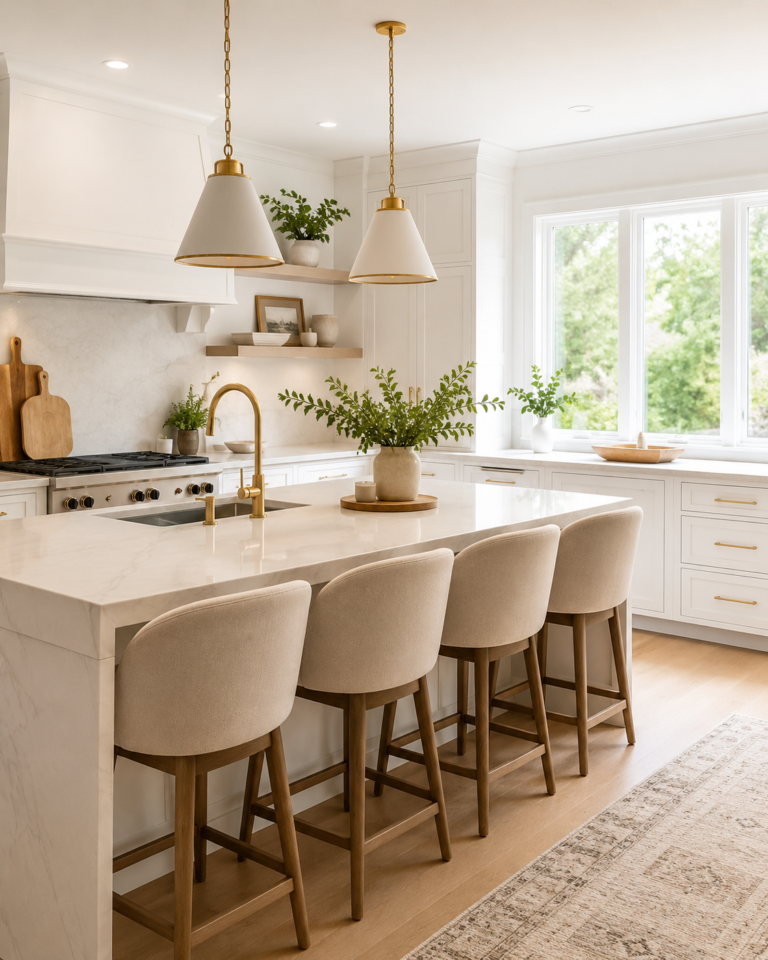
Modern Farmhouse Kitchen Theme
Purpose:
To create a cozy, family-friendly kitchen with classic charm and modern function.
Why It Works:
Modern farmhouse style feels welcoming because it mixes clean cabinetry with warm materials. It can be traditional without feeling old-fashioned.
Key Features:
- Shaker cabinets
- Wood island or shelves
- Apron-front sink
- Black or brass hardware
- Classic tile backsplash
Detailed Explanation:
This theme works well in suburban homes, cottages, family kitchens, and open-plan spaces. The key is restraint. A modern farmhouse kitchen should not feel overloaded with signs or themed accessories. Instead, use classic materials: shaker cabinets, quartz or butcher block, ceramic tile, wood stools, and simple pendant lights.
Color combinations include warm white with black hardware, sage with brass, navy with white quartz, or cream with natural wood. For lighting, black metal pendants or aged brass fixtures work well.
Use a washable runner rug to add warmth, especially if the kitchen has hard flooring. Add open shelves only if you can keep them neat.
Best For:
Family homes, traditional homes, casual kitchens, and homeowners who want warmth and comfort.
Designer Tip:
Designers often modernize farmhouse kitchens by keeping the lines cleaner and using fewer decorative objects.
Common Mistake To Avoid:
Do not over-theme the room with word signs, fake distressed finishes, and too many rustic pieces. Use texture and classic details instead.
Maintenance Level:
Medium Maintenance. Painted cabinets, rugs, and open shelves need regular care.
Estimated Budget (USD):
$500–$4,000 for hardware, lighting, rugs, and styling. $20,000–$75,000+ for a larger farmhouse-style remodel.
Japandi Kitchen Theme
Purpose:
To create a peaceful kitchen with simple lines, natural materials, and low visual clutter.
Why It Works:
Japandi design blends Japanese simplicity with Scandinavian warmth. It is ideal for kitchens because it supports calm organization and practical beauty.
Key Features:
- Light wood cabinets
- Simple cabinet fronts
- Hidden storage
- Neutral colors
- Minimal accessories
Detailed Explanation:
A Japandi kitchen works especially well in small homes, apartments, and open-plan spaces because it keeps the visual field calm. Use flat-panel cabinets, light oak, warm white walls, stone-look counters, and simple black or nickel fixtures.
The best colors are warm white, sand, soft beige, pale gray, oak, charcoal, and muted green. Lighting should be soft but practical. Use under-cabinet lights for prep work and simple pendants over the island or dining area.
Storage is central to this theme. Keep small appliances behind doors or inside cabinets. Use drawer dividers, pull-outs, and pantry bins so counters stay clear.
Best For:
Small kitchens, minimalist homes, apartments, and homeowners who want a calm cooking space.
Designer Tip:
Designers often use texture instead of many objects in Japandi kitchens. Wood grain, linen, ceramic, and stone provide interest without clutter.
Common Mistake To Avoid:
Do not make the room so minimal that it feels cold. Add warm wood, soft lighting, and handmade-style ceramics.
Maintenance Level:
Low Maintenance. Fewer visible items and simple surfaces make cleaning easier.
Estimated Budget (USD):
$400–$2,500 for organizers, lighting, and decor. $15,000–$80,000+ for new cabinetry and hidden storage.
Mediterranean Kitchen Theme
Purpose:
To create a warm, soulful kitchen with texture, character, and old-world charm.
Why It Works:
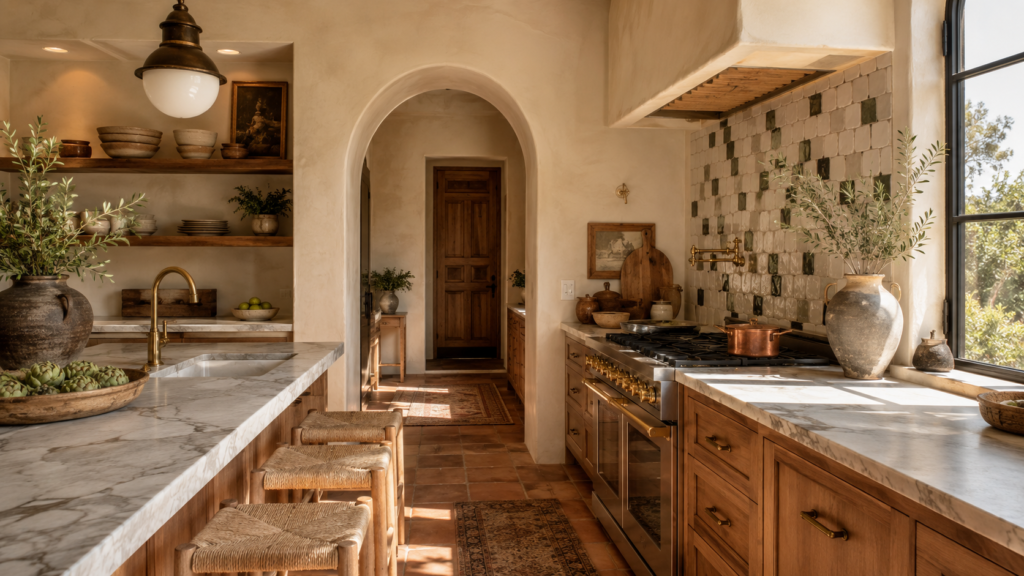
Mediterranean kitchens feel inviting because they use earthy colors, tactile surfaces, arches, wood, tile, and warm metals. The look feels lived-in but still elegant.
Key Features:
- Cream or plaster-style walls
- Terracotta or stone-look floors
- Wood cabinets
- Arched details
- Brass or bronze hardware
Detailed Explanation:
This theme works best in homes with warmth, natural light, or architectural character. You do not need a villa-style house to use it, but the materials should feel authentic and grounded. Choose cream walls, warm wood, handmade-look tile, terracotta tones, bronze hardware, and simple open shelves.
Color combinations include cream with terracotta, olive with walnut, white with warm clay, or beige with aged brass. Lighting should feel warm and slightly romantic. Ceramic pendants, bronze sconces, and soft under-cabinet lighting work well.
For decor, use olive branches, ceramic bowls, woven baskets, linen towels, and wood boards. Keep modern appliances simple so they do not fight the old-world feel.
Best For:
Warm climates, character homes, large kitchens, and homeowners who love earthy elegance.
Designer Tip:
Designers often use handmade-looking tile in Mediterranean kitchens because slight variation makes the room feel more personal.
Common Mistake To Avoid:
Do not use too many heavy details in a small kitchen. Choose one or two Mediterranean elements, such as tile and warm wood.
Maintenance Level:
Medium Maintenance. Textured tile and natural finishes may need more careful cleaning than smooth modern surfaces.
Estimated Budget (USD):
$500–$3,500 for tile accents, decor, and lighting. $25,000–$100,000+ for flooring, cabinetry, and architectural details.
Moody Contemporary Kitchen Theme
Purpose:
To create a dramatic kitchen that feels sophisticated, intimate, and high-end.
Why It Works:
Dark colors add depth and drama. When balanced with lighter counters, warm wood, and good lighting, a moody kitchen can feel luxurious rather than gloomy.
Key Features:
- Charcoal, navy, espresso, or deep green cabinets
- Light stone or quartz counters
- Warm metal hardware
- Strong lighting
- Minimal decor
Detailed Explanation:
This theme works best in kitchens with good natural light or strong artificial lighting. Use dark cabinets on the lower half if the kitchen is small. In a large kitchen, full dark cabinetry can feel very elegant when paired with a lighter backsplash and counters.
Color combinations include charcoal with walnut, navy with brass, deep olive with cream, or espresso with polished nickel. Use under-cabinet lighting to keep work areas bright. Pendant lights with glass, metal, or ceramic shades can add mood without making the room too dark.
Decor should be edited: a vase, a bowl, cookbooks, or a plant. The richness should come from materials, not clutter.
Best For:
Modern homes, evening entertainers, large kitchens, and homeowners who want a bold look.
Designer Tip:
Designers often add warm wood to dark kitchens because it prevents the space from feeling too cold or severe.
Common Mistake To Avoid:
Do not choose dark cabinets without testing the color in your actual lighting. Some shades look beautiful online but too heavy in real rooms.
Maintenance Level:
Medium Maintenance. Dark finishes may show dust, fingerprints, and water marks.
Estimated Budget (USD):
$700–$4,000 for paint, lighting, and hardware. $20,000–$90,000+ for new dark cabinetry, counters, and lighting.
Coastal Calm Kitchen Theme
Purpose:
To create a bright, relaxed kitchen that feels fresh, airy, and easy to live with.
Why It Works:
Coastal kitchens use light colors, natural textures, and simple materials to make the space feel open. The theme works especially well in small or sunny kitchens.
Key Features:
- White, cream, blue, or soft gray palette
- Light wood accents
- Woven stools
- Glass pendants
- Simple natural decor
Detailed Explanation:
A coastal kitchen should feel breezy, not overly themed. Avoid too many seashells, anchors, or beach signs. Instead, focus on light, texture, and softness. Use warm white cabinets, pale oak, soft blue accents, white quartz, and woven materials.
This style works in small homes because light colors expand the room visually. In larger kitchens, add deeper blue, navy, or driftwood tones for depth. Use glass pendants, linen shades, and under-cabinet lighting to keep the room bright.
Decor can include a bowl of citrus, ceramic dishes, woven baskets, light wood boards, and fresh greenery. The result should feel relaxed but still polished.
Best For:
Small kitchens, coastal homes, bright apartments, and homeowners who want a clean relaxed look.
Designer Tip:
Designers often keep coastal kitchens simple because the mood comes from light, texture, and airiness, not themed objects.
Common Mistake To Avoid:
Do not make the kitchen look like a souvenir shop. Use coastal colors and materials, not too many beach decorations.
Maintenance Level:
Low Maintenance. Light surfaces need regular wiping, but the overall style is easy to maintain.
Estimated Budget (USD):
$300–$2,000 for stools, lighting, paint, and decor. $15,000–$70,000+ for cabinetry, counters, and flooring updates.
Colorful Vintage Kitchen Theme
Purpose:
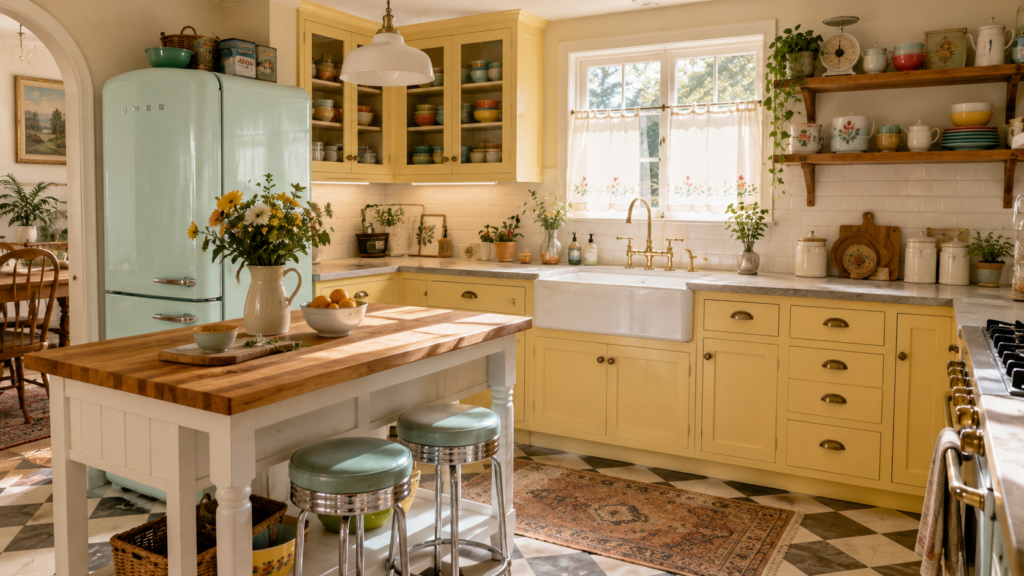
To create a cheerful kitchen with personality, charm, and a collected feel.
Why It Works:
Vintage-inspired kitchens feel memorable because they do not look overly perfect. Color, pattern, classic materials, and personal details give the room warmth.
Key Features:
- Soft colorful cabinets
- Checkerboard or classic flooring
- Vintage-style lighting
- Brass or chrome hardware
- Open shelves with curated dishes
Detailed Explanation:
This theme is perfect for older homes, cottages, apartments, and anyone who wants a kitchen with character. Use soft colors instead of harsh ones: butter yellow, sage green, dusty blue, cream, clay, or muted red. These colors feel nostalgic but still livable.
Materials can include butcher block, ceramic tile, laminate, quartz, painted cabinets, and classic chrome or brass hardware. A checkerboard floor can look charming, but choose durable porcelain, vinyl, or stone-look tile depending on budget and maintenance needs.
Decor should feel collected: framed art, cafe curtains, vintage-style dishes, a small lamp, or a floral arrangement. Keep daily clutter controlled so the kitchen feels charming, not chaotic.
Best For:
Older homes, creative homeowners, rental updates, and kitchens that need personality.
Designer Tip:
Designers often use vintage elements in kitchens to make the space feel less showroom-like and more personal.
Common Mistake To Avoid:
Do not combine too many colors and patterns at once. Choose one main color, one pattern, and a few supporting accents.
Maintenance Level:
Medium Maintenance. Painted cabinets, open shelves, and patterned floors need regular cleaning.
Estimated Budget (USD):
$300–$2,500 for paint, curtains, lighting, and decor. $10,000–$60,000+ for flooring, counters, and cabinet updates.
Professional Designer Advice for Choosing a Kitchen Theme
Layout Planning
A theme should never fight the layout. Before choosing colors or decor, study how the kitchen works. Is the sink close to the prep area? Are dishes near the dishwasher? Does the island block movement? Are small appliances taking over the counter?
The best theme supports the room’s function. A Japandi kitchen needs hidden storage. A farmhouse kitchen needs enough cabinet space to avoid clutter. A vintage kitchen needs editing so it does not feel crowded.
Lighting
Lighting can make or break a kitchen theme. NKBA’s 2026 kitchen research emphasizes natural light, lighting quality, and task lighting as important kitchen priorities. Under-cabinet lighting and pendants remain especially useful for work zones and atmosphere.
Use ambient lighting for the room, task lighting for counters, and accent lighting for shelves or cabinets. Warm lighting usually makes wood, tile, and paint feel more inviting.
Scale
Choose furniture and fixtures that fit your kitchen size. Oversized pendants can crowd a small island. Tiny hardware can look weak on tall cabinets. A large patterned floor can overwhelm a compact kitchen.
Scale also matters with decor. One large bowl on an island often looks better than many small objects.
Balance
A kitchen theme should feel balanced between beauty and function. Too much open shelving can look messy. Too many closed cabinets can feel heavy. Too many decorative items can make cleaning harder.
A good kitchen usually mixes closed storage, a few display moments, practical lighting, and enough open counter space.
Color Harmony
Color harmony is what makes a kitchen theme feel expensive. Use a simple formula: one main color, one support material, and one accent finish. For example, cream cabinets, oak island, and brass hardware. Or charcoal cabinets, white quartz, and walnut accents.
Material Selection
Choose materials based on real use. Quartz, porcelain tile, ceramic tile, stainless steel, sealed wood, laminate, and durable cabinet finishes are practical for kitchens. Natural stone and butcher block can be beautiful, but they need more care.
Long-Term Durability
Spend more on what is hard to change: cabinetry, counters, flooring, layout, lighting, and ventilation. Use decor, stools, runners, paint, and hardware for personality because they are easier to update later.
Common Kitchen Theme Mistakes to Avoid
1. Choosing a Theme Only From One Photo
A kitchen photo may look beautiful because of natural light, ceiling height, or expensive materials. Adapt the idea to your real room instead of copying it exactly.
2. Ignoring Storage
A kitchen theme fails fast when there is not enough storage. Plan drawers, pantry space, pull-outs, and appliance zones before styling.
3. Using Too Many Finishes
Three cabinet colors, multiple metals, different woods, and busy tile can feel chaotic. Keep the palette controlled.
4. Forgetting Countertop Clutter
Even the best theme looks messy when counters are crowded. Use appliance garages, pantry storage, trays, and drawers.
5. Choosing Delicate Materials for Heavy Use
Some natural stones stain or etch. Some woods need sealing. Some light fabrics stain near cooking zones. Choose materials based on lifestyle.
6. Over-Theming the Room
A farmhouse kitchen does not need signs everywhere. A coastal kitchen does not need shells on every shelf. Use subtle design cues instead.
7. Poor Lighting
A beautiful theme can look dull under harsh or weak lighting. Use layered lighting with warm bulbs and task lights.
8. Buying Decor Before Fixing Basics
New jars and art cannot fix broken hardware, bad lighting, poor storage, or chipped paint. Start with function, then decorate.
9. Ignoring the Rest of the Home
A kitchen should connect with nearby rooms. If your living room is warm and traditional, an ultra-cold kitchen may feel disconnected.
Kitchen Decorating Theme Budget Guide
Budget Friendly: $300–$5,000
This range works for renters, small homes, and quick updates. Focus on paint, hardware, lighting, runners, stools, shelves, organizers, and decor.
Best upgrades:
- Cabinet hardware
- Paint refresh
- Under-cabinet lighting
- Counter stools
- Kitchen runner
- Open shelf styling
- Faucet upgrade
- Pantry organizers
Mid Range: $5,000–$35,000
This range can significantly change the kitchen if the layout stays mostly the same. It may include cabinet painting, refacing, countertops, backsplash, lighting, pantry systems, and new appliances. Kitchen remodel cost guides show many 2026 projects vary widely, with national average remodels often around the high five figures depending on scope and finish level.
Best upgrades:
- Cabinet painting or refacing
- New backsplash
- Quartz or butcher block counters
- Better lighting
- New sink and faucet
- Pantry storage
- Island update
- Semi-custom details
Luxury: $35,000–$150,000+
This level is for full kitchen transformations with custom cabinets, layout changes, premium appliances, professional lighting plans, stone surfaces, new flooring, and built-in storage. High-end kitchen remodels can exceed $100,000 depending on market, materials, appliances, and structural work.
Best upgrades:
- Custom cabinetry
- Large island
- Premium counters
- Panel-ready appliances
- Walk-in or butler pantry
- Designer lighting
- New flooring
- Custom range hood
- Architectural details
Conclusion
A kitchen decorating theme should make your home feel more like you, but it should also make daily life easier. The right theme helps you choose colors, lighting, hardware, materials, furniture, and accessories without second-guessing every detail.
If your home feels modern and calm, a warm modern or Japandi kitchen may be the best fit. If you love comfort and family gatherings, modern farmhouse can feel welcoming. If you want character, Mediterranean or colorful vintage may suit you better. If your kitchen is small and sunny, coastal calm can make it feel brighter. If you want drama, a moody contemporary theme can make the space feel luxurious.
Start with your real kitchen, not a perfect photo. Look at the light, layout, cabinet condition, storage needs, and the rooms nearby. Then choose a theme that supports your lifestyle. A beautiful kitchen should not only impress people when they walk in. It should make cooking, cleaning, gathering, and living feel better every day.