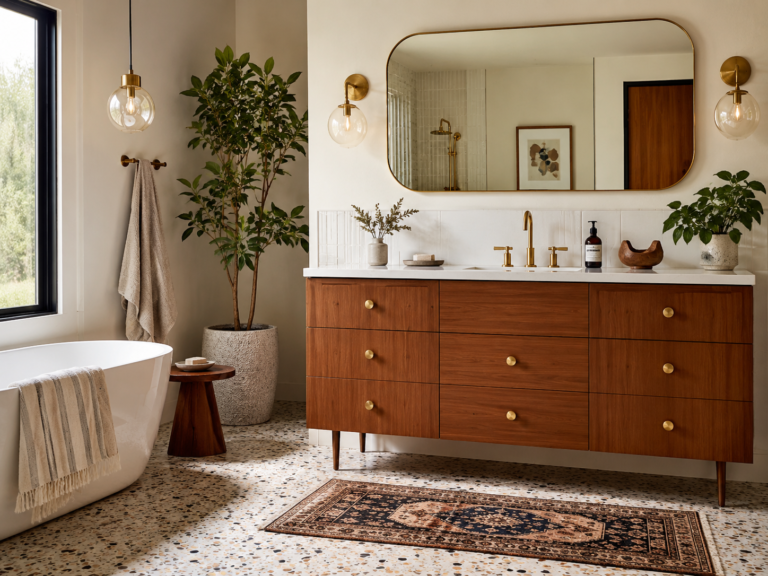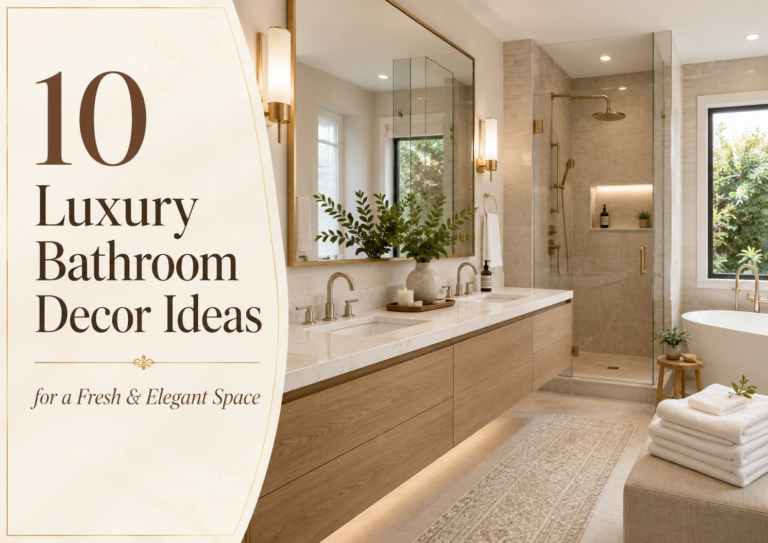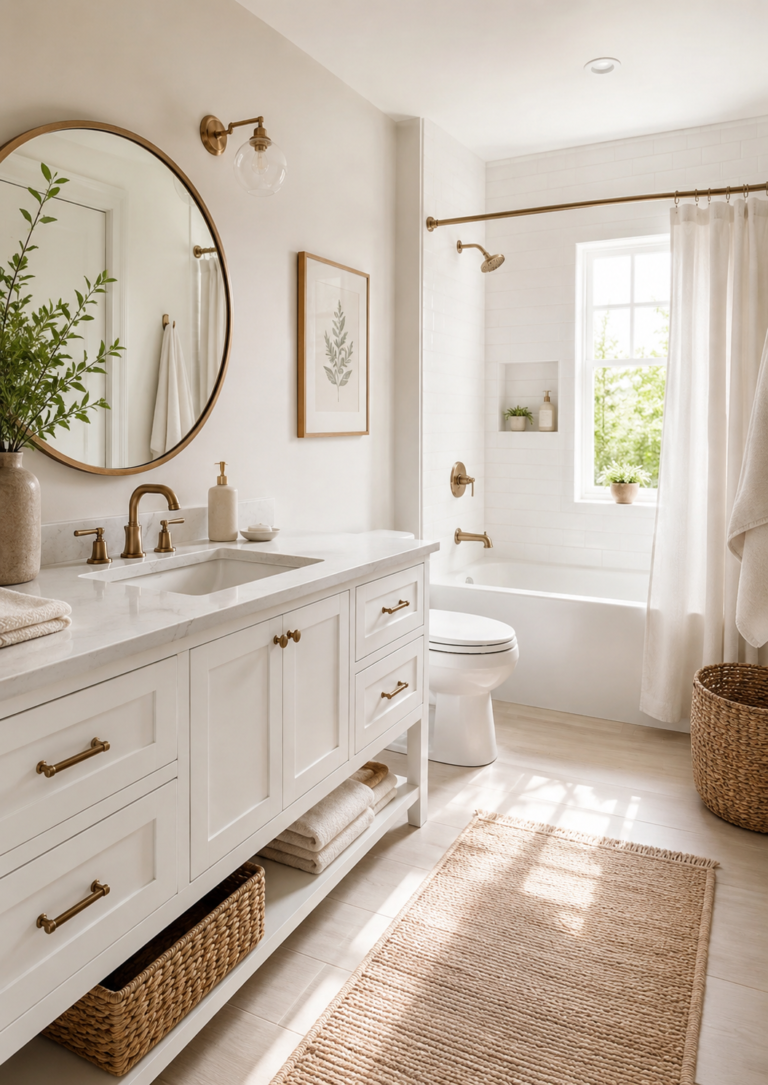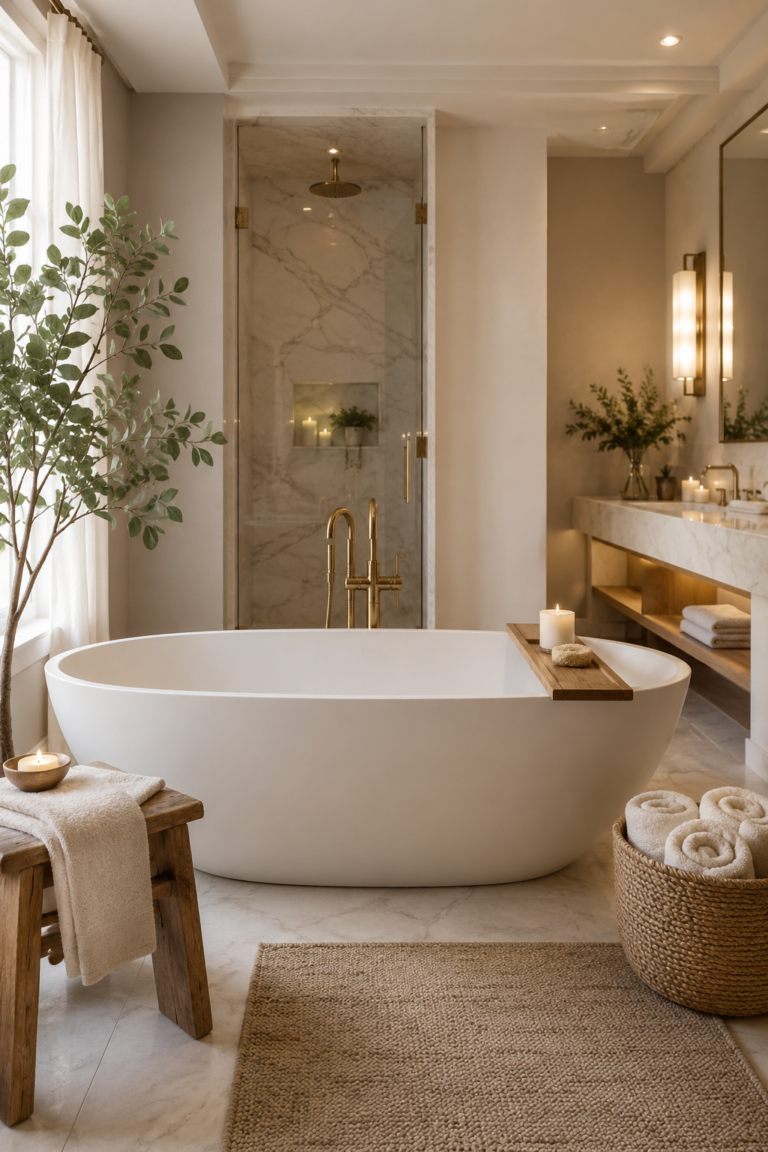
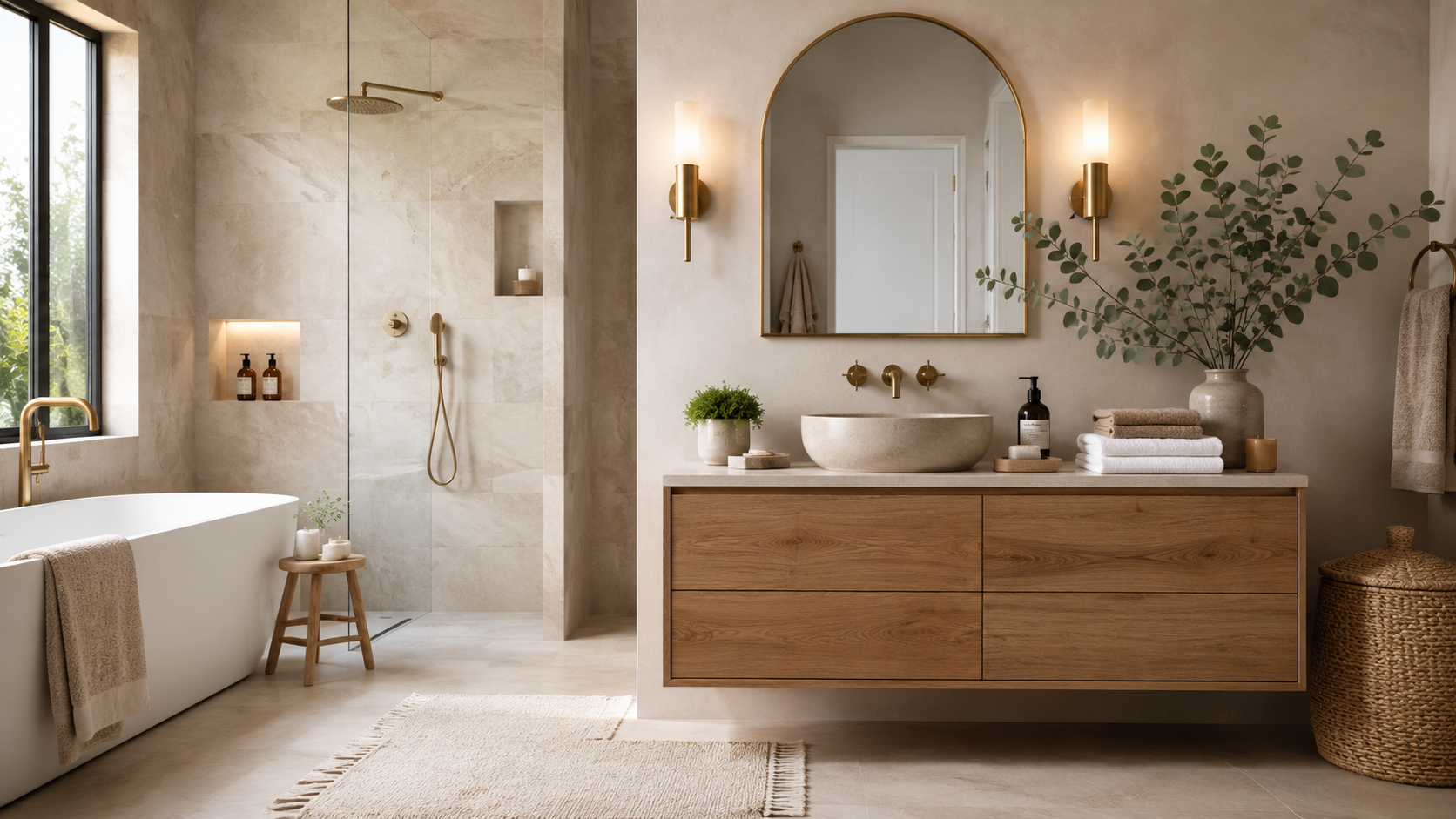
7 Aesthetic Bathroom Ideas You’ll Want to Copy
A bathroom can be clean and still feel unfinished. You may have a working vanity, a mirror, a shower curtain, and decent lighting, but the space still does not feel calm, pretty, or pulled together. Sometimes the problem is not the size of the bathroom. It is the lack of mood.
Many bathrooms feel cold because they are treated only as practical rooms. White tile, harsh lighting, plastic bottles, thin towels, and cluttered counters can make the space feel more like a utility area than a place to refresh yourself. But a bathroom does not need to be huge or expensive to feel beautiful. The right color palette, lighting, storage, texture, and accessories can completely change how the room feels.
That is why aesthetic bathroom ideas are so useful. They are not just about making a bathroom look good in a photo. The best ones make your morning routine easier, your evening shower more relaxing, your storage more organized, and your home feel more cared for.
I’ve noticed that the most attractive bathrooms usually have a clear design story. The towels match the mood. The mirror fits the vanity. The lighting feels soft instead of harsh. The storage hides the messy products. The materials look beautiful but can still handle moisture and daily cleaning.
These 7 aesthetic bathroom ideas you’ll want to copy are practical enough for real homes and pretty enough for Pinterest. Some are simple weekend updates. Others are better for homeowners planning a larger refresh. Each idea focuses on beauty, comfort, function, lighting, maintenance, or long-term value.
Quick Wins for an Aesthetic Bathroom
- Switch to matching bottles. Use glass, ceramic, amber, or stone-look dispensers for soap, lotion, shampoo, and conditioner.
- Upgrade the bath mat. A clean cotton mat, teak mat, or stone bath mat can make the floor area look more intentional.
- Add warm lighting. Replace harsh cool bulbs with warm white bulbs for a softer, more flattering bathroom glow.
- Use one tray on the vanity. A tray keeps perfume, soap, candles, or skincare from looking scattered.
- Choose better towels. White, cream, sage, taupe, dusty blue, or charcoal towels can instantly make the space feel more styled.
Featured Snippet Questions
What makes a bathroom aesthetic?
An aesthetic bathroom feels visually balanced, clean, and intentional. It usually has a clear color palette, soft lighting, organized storage, attractive towels, stylish hardware, and thoughtful accessories. The most beautiful bathrooms also stay practical, with materials that handle moisture, daily use, and regular cleaning.
How can I make my bathroom aesthetic on a budget?
Start with small upgrades: new towels, matching soap dispensers, a better shower curtain, a framed mirror, warm bulbs, plants, and countertop organizers. Paint, peel-and-stick wallpaper, updated hardware, and a new faucet can also make a bathroom look more aesthetic without a full remodel.
What colors are best for an aesthetic bathroom?
Warm white, cream, beige, taupe, sage green, dusty blue, soft pink, clay, charcoal, and natural wood tones work beautifully. The best color depends on your lighting and tile. A simple palette with two or three main colors usually looks more elegant than too many competing shades.
Are plants good for bathroom decor?
Plants can be beautiful in bathrooms if the room has enough light and ventilation. Pothos, snake plant, ZZ plant, peace lily, and ferns can work in the right conditions. If your bathroom has no natural light, use dried stems, eucalyptus, or high-quality faux greenery instead.
What is the easiest aesthetic bathroom upgrade?
The easiest upgrade is styling the vanity area. Replace plastic bottles, add a tray, use a framed mirror, improve lighting, and keep only daily essentials visible. This area is usually the first thing people notice, so small changes can make the whole bathroom feel more polished.
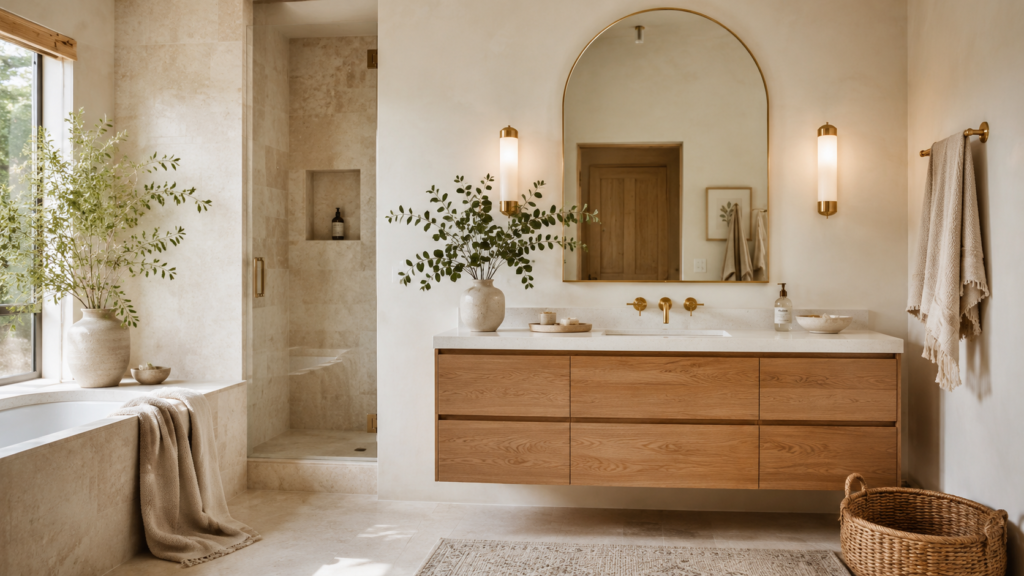
Warm Neutral Spa Bathroom
Purpose:
To create a calm bathroom that feels fresh, soft, and relaxing without looking plain.
Why It Works:
Warm neutrals make a bathroom feel peaceful and clean. Cream, beige, taupe, and warm white soften hard bathroom surfaces and work beautifully with wood, stone, brass, black, or nickel finishes.
Key Features:
- Cream or beige tile
- Oak or walnut vanity
- Warm wall sconces
- Soft towels
- Minimal accessories
Detailed Explanation:
This idea works well in small, medium, and large bathrooms because warm neutrals reflect light without feeling cold. Use stone-look porcelain tile for the floor or shower walls because it gives a high-end look while being easier to maintain than many natural stones.
Pair cream walls with oak, white quartz, and brushed brass for a soft luxury look. For a cooler version, use greige, pale stone, and polished nickel. Lighting should be warm and layered. Wall sconces beside the mirror are more flattering than one harsh overhead light.
Keep decor simple: one tray, one plant or vase, folded towels, and a woven basket are enough.
Best For:
Small bathrooms, guest bathrooms, primary bathrooms, and anyone who wants a clean spa feeling.
Designer Tip:
Designers often use warm neutrals in bathrooms because they make tile, towels, and wood finishes feel more expensive.
Common Mistake To Avoid:
Do not use only beige surfaces with no texture. Add wood grain, woven baskets, stone veining, or ribbed glass so the space does not feel flat.
Maintenance Level:
Low Maintenance. Porcelain tile, quartz, and simple accessories are easy to clean.
Estimated Budget (USD):
$300–$1,500 for styling updates; $5,000–$20,000+ for tile, vanity, and lighting upgrades.
Soft Green Organic Bathroom
Purpose:
To bring a fresh, natural mood into the bathroom while keeping the space calm and timeless.
Why It Works:
Green connects beautifully with wood, white, stone, and natural textures. Soft green feels restful without being boring, which makes it ideal for bathrooms.
Key Features:
- Sage or olive vanity
- Wood shelves
- Cream tile
- Natural baskets
- Plants or botanical art
Detailed Explanation:
This bathroom idea works especially well when the existing tile is white, cream, beige, or light gray. A sage vanity can refresh the room without replacing every surface. If you do not want to paint cabinets, add green through towels, artwork, a shower curtain, or a small rug.
For color harmony, pair sage with warm white and oak. Pair olive with cream and brass. Pair eucalyptus green with soft gray and polished nickel. These combinations feel natural because green sits comfortably with earth tones.
Lighting should be warm, not icy. Plants need real light, so choose them based on your window conditions. In low-light bathrooms, framed botanical prints can give a similar feeling.
Best For:
Nature-inspired bathrooms, rental-friendly updates, guest baths, and bathrooms that feel too plain.
Designer Tip:
Green works well in bathrooms because it gives color while still feeling restful and connected to nature.
Common Mistake To Avoid:
Do not use too many green tones at once. Choose one main green and support it with neutrals.
Maintenance Level:
Medium Maintenance. Painted vanities may need touch-ups, and plants need care.
Estimated Budget (USD):
$150–$800 for towels, art, and accessories; $500–$3,000 for paint, vanity, lighting, and shelving.
Moody Boutique Hotel Bathroom
Purpose:
To create a dramatic, cozy bathroom that feels stylish and expensive.
Why It Works:
Darker colors can make a bathroom feel intimate and luxurious when balanced with good lighting and lighter surfaces.
Key Features:
- Charcoal, deep olive, navy, or espresso tones
- Brass or bronze hardware
- Warm sconces
- Light countertop
- Simple styling
Detailed Explanation:
A moody bathroom works best in powder rooms, guest bathrooms, and primary bathrooms with good lighting. Dark paint or tile can look rich, but it needs contrast. Use a white or cream countertop, a mirror that reflects light, and warm fixtures to prevent the space from feeling heavy.
For small bathrooms, try a dark vanity instead of dark walls. For a powder room, darker walls can be beautiful because the room is used for shorter periods. Materials like marble-look porcelain, quartz, dark wood, and brushed brass create a polished hotel feel.
Add one soft detail, such as a vase, candle, hand towel, or artwork, so the bathroom feels warm rather than severe.
Best For:
Powder rooms, guest bathrooms, dramatic makeovers, and homes with modern or transitional style.
Designer Tip:
Designers often use dark colors in small bathrooms because they can make the room feel intentional rather than just small.
Common Mistake To Avoid:
Do not use dark colors with weak lighting. The bathroom may feel gloomy. Add sconces, ceiling lights, and mirror reflection.
Maintenance Level:
Medium Maintenance. Dark finishes can show dust, fingerprints, and water marks.
Estimated Budget (USD):
$200–$1,200 for paint, towels, hardware, and lighting; $6,000–$25,000+ for a full remodel.
Minimalist White Bathroom With Texture
Purpose:
To create a bright bathroom that feels clean and fresh without becoming cold or boring.
Why It Works:
White bathrooms can look beautiful when they include texture. Tile variation, wood, woven baskets, ribbed glass, and soft towels add depth.
Key Features:
- Warm white palette
- Textured tile
- Wood vanity
- Ribbed or clear glass
- Simple accessories
Detailed Explanation:
A white bathroom fails when every surface is flat and sterile. To make it aesthetic, choose warm white instead of blue-white, and add texture. Zellige-style ceramic tile, handmade-look tile, ribbed glass, waffle towels, and wood accents all help.
This idea works especially well in small bathrooms because white reflects light and makes the space feel open. A floating vanity can show more floor, which also helps the room feel larger. Use brushed nickel for a classic clean look, or brass for warmth.
Keep the countertop clear. A white bathroom looks best when clutter is hidden in drawers, medicine cabinets, or baskets.
Best For:
Small bathrooms, apartments, minimalist homes, and bathrooms with limited natural light.
Designer Tip:
Designers often use texture in white rooms because it creates interest without adding visual clutter.
Common Mistake To Avoid:
Do not mix too many whites without checking undertones. Cool white tile and warm white paint can clash.
Maintenance Level:
Medium Maintenance. White surfaces show hair, dust, and stains faster, but they are easy to spot-clean.
Estimated Budget (USD):
$200–$1,000 for towels, mirror, and accessories; $5,000–$18,000+ for tile and vanity upgrades.
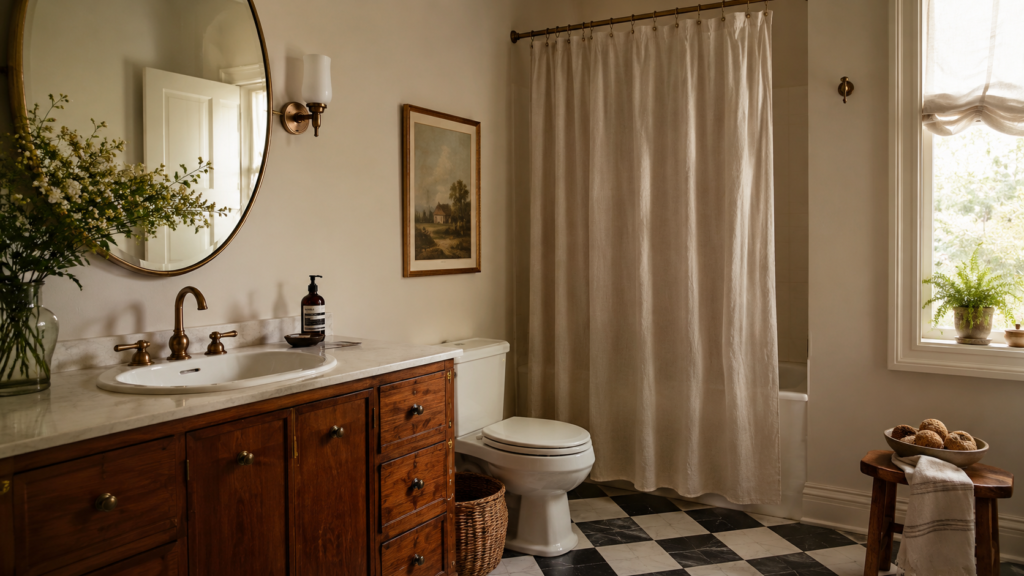
Vintage Modern Bathroom
Purpose:
To make the bathroom feel charming, personal, and collected instead of generic.
Why It Works:
Vintage modern design mixes old and new details. It gives the bathroom character while keeping it functional and fresh.
Key Features:
- Vintage-style mirror
- Brass or bronze hardware
- Checkerboard or classic tile
- Wood vanity
- Framed art
Detailed Explanation:
This idea is perfect for bathrooms that feel too builder-grade. You can add vintage character without sacrificing practicality. Try an antique-style mirror, framed art, aged brass hardware, a classic black-and-white floor, or a warm wood vanity.
For color, use cream, warm white, dusty blue, olive, blush, or soft black. These shades work well with vintage-inspired details. A linen shower curtain can soften the room more than a basic plastic curtain.
Use modern plumbing fixtures for reliability, even if the style feels vintage. This keeps the bathroom practical for daily use.
Best For:
Older homes, powder rooms, guest bathrooms, and anyone who wants a bathroom with personality.
Designer Tip:
Designers often add vintage pieces to bathrooms because small rooms can handle character without overwhelming the whole home.
Common Mistake To Avoid:
Do not use actual vintage plumbing unless it has been properly restored. Choose vintage-style modern fixtures for reliability.
Maintenance Level:
Medium Maintenance. Brass, wood, and patterned floors need regular cleaning and care.
Estimated Budget (USD):
$250–$1,500 for mirror, hardware, art, and textiles; $8,000–$30,000+ for tile, vanity, and fixture upgrades.
Japandi Bathroom With Natural Calm
Purpose:
To create a simple, warm, peaceful bathroom with natural materials and low clutter.
Why It Works:
Japandi design blends Japanese simplicity with Scandinavian warmth. It feels calm because the palette is soft, the lines are clean, and every object has a purpose.
Key Features:
- Oak or light wood vanity
- Beige or stone-look walls
- Simple black or nickel fixtures
- Linen towels
- Minimal decor
Detailed Explanation:
This idea works beautifully in bathrooms where you want a spa feeling without too many accessories. Use warm neutrals, light wood, stone textures, and simple shapes. A floating vanity keeps the room open, while a wood stool adds warmth and function.
For materials, choose porcelain tile, sealed wood, quartz, ceramic, and moisture-safe wall finishes. Microcement-look porcelain or plaster-look paint can create a soft surface effect without the maintenance concerns of unsuitable materials.
Lighting should be gentle. Use warm sconces, hidden LED strips, or soft ceiling lighting. Avoid bright cluttered decor. One plant, one tray, and folded towels are enough.
Best For:
Modern bathrooms, small bathrooms, spa-style interiors, and homes with minimalist decor.
Designer Tip:
Designers often use Japandi principles when a client wants calm but does not want the room to feel empty or cold.
Common Mistake To Avoid:
Do not use unfinished wood in wet areas. Choose sealed wood, teak, or wood-look porcelain where water exposure is high.
Maintenance Level:
Low to Medium Maintenance. Minimal decor is easy to clean, but wood finishes need care.
Estimated Budget (USD):
$300–$2,000 for styling, towels, lighting, and accessories; $8,000–$35,000+ for a full Japandi-style remodel.
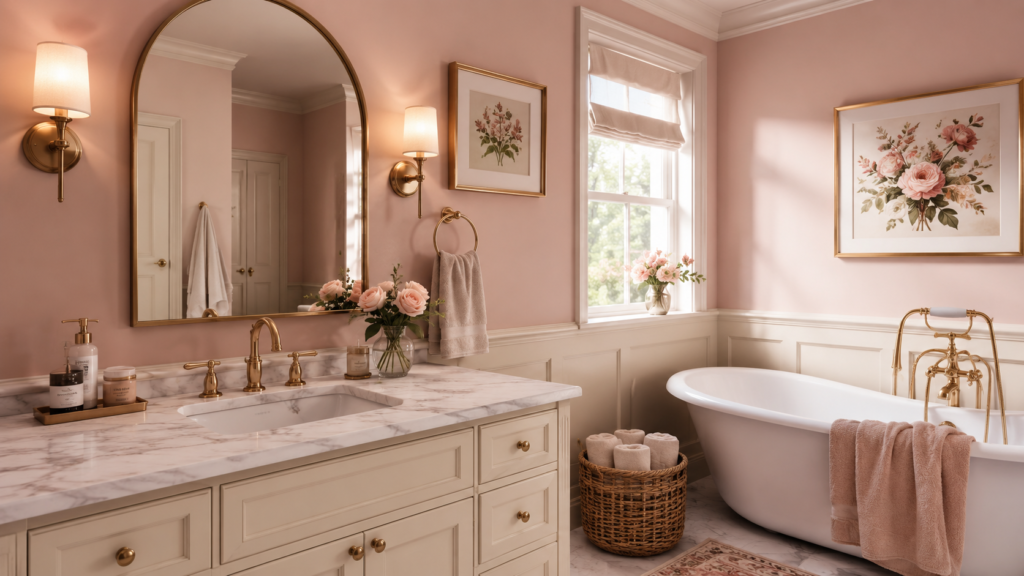
Romantic Soft Pink Bathroom
Purpose:
To create a gentle, pretty bathroom that feels warm, personal, and inviting.
Why It Works:
Soft pink can be surprisingly elegant when paired with cream, white, brass, stone, or warm wood. It adds warmth without overwhelming the room.
Key Features:
- Blush or dusty pink walls
- Cream or white vanity
- Brass hardware
- Arched mirror
- Floral or soft artwork
Detailed Explanation:
This bathroom idea works best when pink is treated as a soft neutral, not a bright candy color. Choose blush, dusty rose, muted clay pink, or beige-pink. Pair it with cream tile, white quartz, brushed brass, and natural wood to keep it sophisticated.
In a small bathroom, use pink on one wall, in towels, or through art. In a powder room, pink walls can feel charming and memorable. Lighting should be warm because cool lighting can make pink look harsh.
Decor accessories can include a small vase, framed floral print, linen towel, or ceramic tray. Keep the styling edited so the room feels elegant, not overly themed.
Best For:
Powder rooms, guest bathrooms, feminine interiors, and soft modern homes.
Designer Tip:
Designers often pair blush tones with warm metals because brass brings out the richness in pink.
Common Mistake To Avoid:
Do not combine bright pink with too many shiny finishes. It can look childish. Use muted pink and natural materials.
Maintenance Level:
Low Maintenance. Painted walls and simple accessories are easy to update later.
Estimated Budget (USD):
$150–$800 for paint, towels, art, and accessories; $3,000–$15,000+ for vanity, lighting, and fixture upgrades.
Professional Designer Advice for Aesthetic Bathroom Design
Layout Planning
A beautiful bathroom still needs a smart layout. Before choosing tile or paint, think about movement. Can the vanity drawers open fully? Does the shower door swing safely? Is there room to stand in front of the sink? Are towels easy to reach?
In small bathrooms, focus on open floor space, wall-mounted storage, and lighter colors. In larger bathrooms, use rugs, stools, plants, and storage furniture to stop the room from feeling empty.
Lighting
Bathroom lighting should be both flattering and practical. Use task lighting near the mirror, general lighting from the ceiling, and accent lighting when possible. Warm bulbs usually make skin tones, tile, and paint look softer. Cold lighting can make even a pretty bathroom feel harsh.
Scale
Scale matters with mirrors, vanities, tile, rugs, and lighting. A tiny mirror over a large vanity looks weak. Oversized pendants in a small bathroom can feel crowded. Choose pieces that fit the room instead of copying a photo exactly.
Balance
Balance hard and soft materials. Bathrooms already have many hard surfaces: tile, glass, metal, stone, and porcelain. Add softness through towels, curtains, baskets, plants, wood, and warm lighting.
Color Harmony
Choose one main color, one support color, and one accent. For example, cream walls, oak vanity, and sage towels. Or white tile, black hardware, and warm wood. A controlled palette makes the bathroom feel more polished.
Material Selection
Bathrooms need moisture-friendly materials. Porcelain tile, ceramic tile, quartz, sealed wood, stainless steel, glass, and bathroom-rated paint are practical choices. Natural stone can be beautiful, but it may need sealing and more careful cleaning.
Long-Term Durability
Spend more on fixed features like tile, vanity, lighting, ventilation, and plumbing fixtures. Use towels, art, paint, and accessories for trendier colors because they are easier to change later.
Common Aesthetic Bathroom Mistakes to Avoid
1. Decorating Before Decluttering
This happens when homeowners buy more accessories before removing visual clutter. Clear the counter first, then add only a few beautiful items.
2. Using Harsh Lighting
Aesthetic bathrooms need soft, flattering lighting. Replace cool bulbs and add sconces or warm LED lighting when possible.
3. Choosing Pretty Materials That Are Hard to Maintain
Some materials look beautiful in photos but stain, scratch, or absorb moisture easily. Research cleaning needs before buying.
4. Ignoring Ventilation
Moisture can damage paint, wood, grout, and cabinets. Use a proper exhaust fan and open windows when possible.
5. Buying the Wrong Size Mirror
A mirror that is too small can make the vanity look unfinished. Choose a mirror that feels balanced with the sink and lights.
6. Overloading Open Shelves
Open shelves can look beautiful, but too many products make them messy. Use baskets and closed storage for daily items.
7. Forgetting Towel Quality
Thin, mismatched towels can weaken the whole design. Choose towels that match the color palette and feel good to use.
8. Using Too Many Competing Colors
A bathroom can feel busy fast. Stick to a simple palette and use texture for interest.
9. Copying a Trend Without Considering Your Space
A dark bathroom, pink bathroom, or minimalist bathroom may look great online, but your lighting, tile, and room size matter. Adapt the idea instead of copying it exactly.
Aesthetic Bathroom Budget Guide
Budget Friendly: $100–$2,500
This range is best for renters, small bathrooms, and quick makeovers. Focus on visible details that do not require major construction.
Best upgrades:
- New towels
- Shower curtain
- Paint
- Mirror
- Faucet
- Hardware
- Vanity tray
- Plants
- Lighting bulbs
- Storage baskets
Mid Range: $2,500–$15,000
This range can create a major refresh if the layout stays the same. You may replace the vanity, lighting, faucet, mirror, flooring, or shower glass. Bathroom remodel cost guides often show mid-range projects varying widely based on size, labor, and material choices.
Best upgrades:
- New vanity
- Quartz countertop
- Wall sconces
- New floor tile
- Better shower fixtures
- Storage cabinet
- Updated mirror
- Fresh paint or wallpaper
Luxury: $15,000–$80,000+
This range is for full bathroom remodels, larger primary bathrooms, custom tile, walk-in showers, freestanding tubs, premium fixtures, new plumbing, heated floors, and custom storage. Recent design and remodeling coverage shows full bathroom remodels can reach high five figures depending on scope and finish level.
Best upgrades:
- Walk-in shower
- Custom vanity
- Large-format porcelain tile
- Freestanding tub
- Heated floors
- Designer lighting
- Stone or quartz surfaces
- Built-in linen storage
Conclusion
An aesthetic bathroom is not just a bathroom filled with pretty things. It is a room where the colors feel calm, the lighting feels soft, the storage works, and the materials make sense for daily life.
Start with the feeling you want. If you want calm, choose warm neutrals or Japandi style. If you want character, try vintage modern details. If you want drama, a moody boutique palette may be perfect. If you want something soft and charming, blush pink can work beautifully when it is balanced with cream, brass, and natural texture.
The best bathroom ideas are the ones you can actually live with. A bathroom should be easy to clean, comfortable to use, and beautiful enough to make everyday routines feel a little more enjoyable. When the design supports both style and function, your bathroom becomes more than a practical space. It becomes one of the most refreshing corners of your home.