10 Luxury Bathroom Decor Ideas for a Fresh & Elegant Space
A bathroom can quietly set the tone for your whole day. If it feels dark, cluttered, cold, or unfinished, even the most beautiful home can feel slightly less comfortable. Many homeowners spend money on living rooms and kitchens first, but the bathroom is the room where you begin your morning, reset after a long day, and take a few private minutes to feel calm again.
The good news is that luxury bathroom decor does not always mean tearing out every wall or spending like a five-star hotel. A fresh and elegant bathroom is often created through smarter choices: better lighting, warmer materials, cleaner storage, balanced color, and finishes that feel intentional rather than random.
After researching hundreds of luxury homes and designer bathrooms, one thing always stands out: expensive-looking bathrooms are not usually the busiest ones. They are calm, layered, practical, and edited. The vanity has space to breathe. The mirror is chosen carefully. Towels feel soft and coordinated. Lighting flatters the room instead of making it harsh. Materials look beautiful but are still suitable for moisture, daily use, and long-term maintenance.
This guide shares 10 luxury bathroom decor ideas for a fresh and elegant space that feels realistic for modern homes. Some ideas are simple styling upgrades, while others are larger design moves for homeowners planning a remodel. Each one is meant to improve beauty, comfort, storage, lighting, maintenance, or property value without recommending unrealistic layouts or fake trends.
Quick Wins for a More Luxury Bathroom Decor
- Upgrade your mirror. A larger framed mirror or arched mirror can instantly make the bathroom feel more designed.
- Use matching dispensers. Replace plastic bottles with glass, ceramic, or stone-look containers for soap, lotion, and shampoo.
- Add layered lighting. Use vanity lights, ceiling lights, and soft accent lighting instead of one harsh overhead bulb.
- Choose better towels. Thick white, oatmeal, taupe, or sage towels can make even a simple bathroom feel spa-like.
- Clear the countertop. Keep only daily essentials visible. Store backup products in drawers, baskets, or cabinets.
Featured Snippet Questions
What makes a bathroom look luxurious?
A bathroom looks luxurious when the design feels calm, coordinated, and well finished. Key elements include layered lighting, quality materials, clean storage, soft towels, a beautiful mirror, and a consistent color palette. Luxury is less about clutter and more about thoughtful details that improve comfort and function.
How can I make a small bathroom feel elegant?
Use light neutral colors, a large mirror, wall-mounted storage, clear glass shower doors, and simple hardware. Keep the floor as open as possible. Large-format tiles, floating vanities, and warm lighting can make a small bathroom feel bigger, cleaner, and more polished.
What colors are best for a luxury bathroom?
Soft neutrals such as warm white, cream, beige, taupe, greige, light brown, and stone gray work beautifully. For more depth, add sage green, olive, charcoal, black accents, or muted blue. The most elegant bathrooms usually use two or three main colors instead of too many competing shades.
Is marble necessary for a luxury bathroom?
No, marble is beautiful but not required. Porcelain tile that mimics marble, quartz countertops, ceramic wall tile, natural wood vanities, brushed metal hardware, and high-quality mirrors can create a luxurious look at a more practical price. The key is choosing materials that look cohesive and are easy to maintain.
What is the easiest luxury bathroom upgrade?
The easiest upgrade is improving the vanity area. A stylish mirror, better lighting, matching countertop accessories, fresh towels, and a small vase or plant can transform the room without construction. This area is usually the first thing people notice when they enter a bathroom.
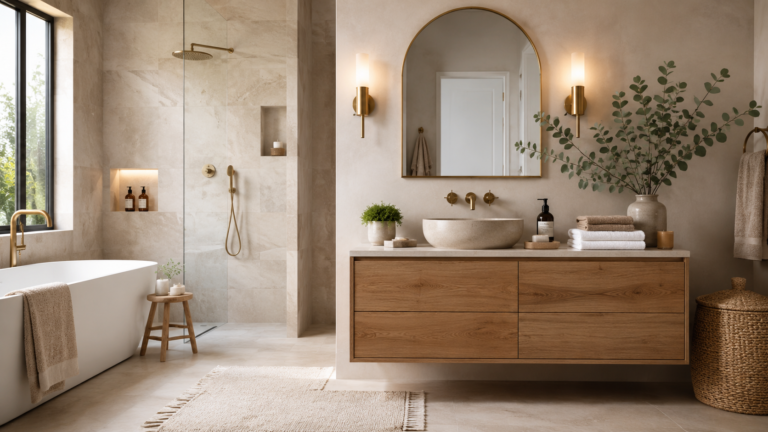
Create a Warm Neutral Spa Bathroom
Purpose:
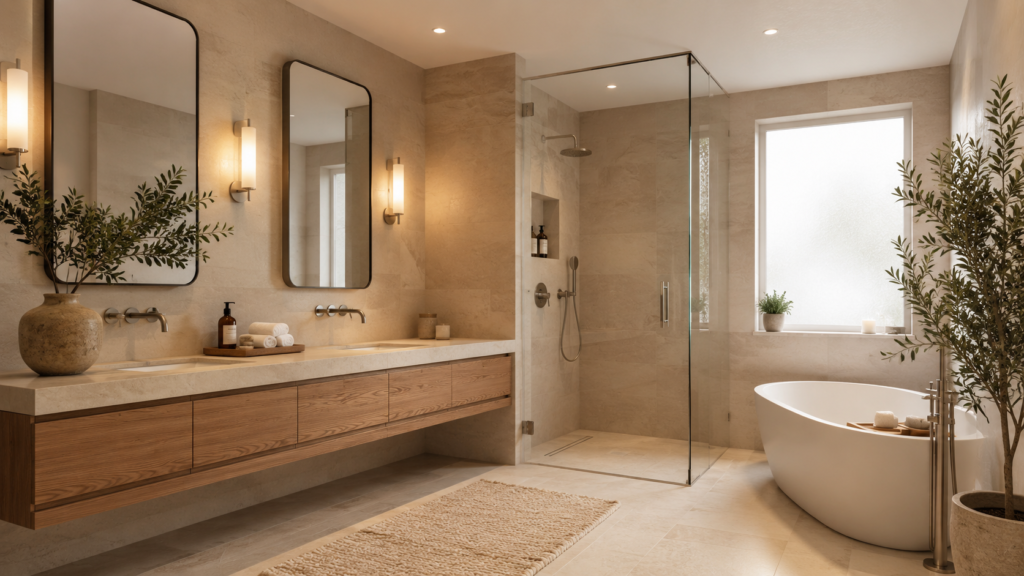
To create a calm, timeless bathroom that feels fresh, soft, and expensive without looking cold.
Why It Works:
Warm neutrals are popular because they flatter natural light and make bathrooms feel welcoming. Cream, taupe, beige, and soft white create a peaceful base that works with wood, stone, chrome, brass, or matte black.
Key Features:
- Cream or beige tile
- Wood vanity
- Soft white towels
- Minimal countertop decor
- Warm LED lighting
Detailed Explanation:
This idea works best in primary bathrooms, guest bathrooms, and small bathrooms that need a brighter feel. Use large-format porcelain tiles on the floor or shower walls to reduce grout lines and create a seamless look. Pair them with an oak or walnut vanity for warmth. A quartz countertop in white, cream, or light stone gray keeps the space practical.
Lighting should be soft but functional. Use 2700K–3000K bulbs around the mirror and a dimmable ceiling fixture if possible. Decor accessories should be quiet: a ceramic soap dish, a small tray, rolled towels, and one natural element such as eucalyptus or a small plant.
Best For:
Small to medium bathrooms, guest bathrooms, and homeowners who want a timeless luxury look.
Designer Tip:
Designers often choose warm neutrals because they make bathrooms feel elegant without depending on bold trends.
Common Mistake To Avoid:
Do not use too many beige shades without texture. Add wood grain, stone veining, woven baskets, or linen towels so the room does not feel flat.
Maintenance Level:
Low Maintenance. Porcelain tile, quartz counters, and washable towels are easy to clean.
Estimated Budget:
$500–$3,500 for decor and cosmetic updates; $8,000–$25,000+ for a larger remodel.
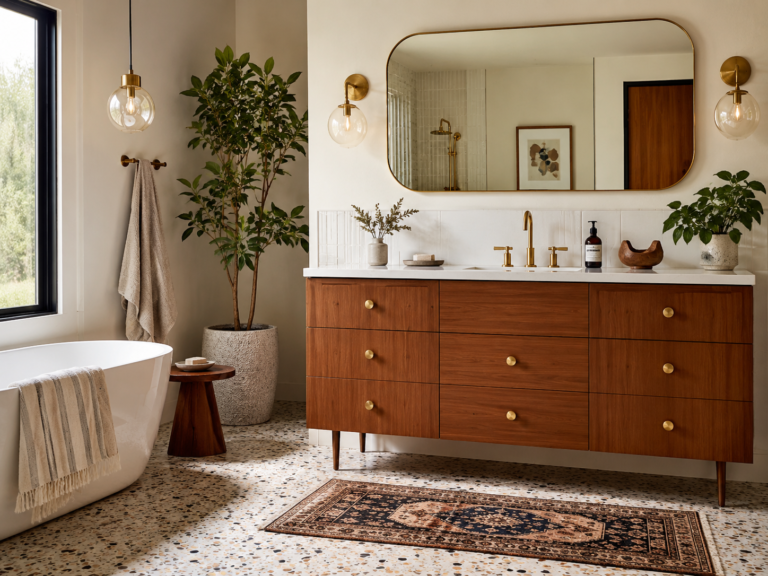
Add a Statement Vanity With Stone or Quartz
Purpose:
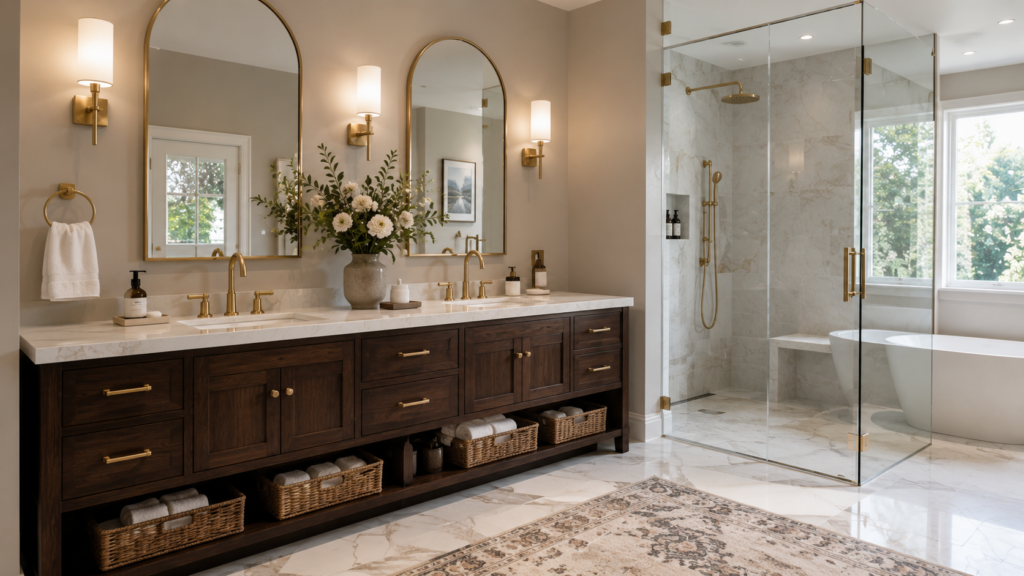
To make the vanity the visual anchor of the bathroom while improving storage and daily function.
Why It Works:
The vanity is usually the most used feature in a bathroom. A well-designed vanity makes the whole space feel more custom, even when the rest of the room is simple.
Key Features:
- Wood or painted cabinet base
- Quartz or natural stone countertop
- Framed mirrors
- Wall sconces
- Organized drawers
Detailed Explanation:
A luxury vanity should look beautiful and work hard. For busy bathrooms, quartz is often more practical than marble because it resists stains better and needs less maintenance. Choose a vanity with drawers instead of only cabinet doors. Drawers make makeup, skincare, hair tools, and towels easier to organize.
For color, pair walnut with cream, oak with white, or deep charcoal with brass hardware. If the bathroom is small, a floating vanity helps show more floor and makes the room feel open. In larger bathrooms, a furniture-style vanity with legs or detailed hardware can feel elegant and custom.
Best For:
Primary bathrooms, powder rooms, and bathrooms where storage is a problem.
Designer Tip:
A vanity looks more expensive when the mirror and lighting are planned together instead of chosen separately.
Common Mistake To Avoid:
Avoid a vanity that is too large for the room. It can block movement and make the bathroom feel cramped.
Maintenance Level:
Medium Maintenance. Wood cabinets need moisture control, and stone surfaces may require sealing depending on the material.
Estimated Budget:
$800–$5,000 for vanity replacement; $5,000–$15,000+ with plumbing, counters, and lighting.
Use Large-Format Stone-Look Tile
Purpose:
To create a clean, high-end bathroom with fewer grout lines and a more seamless finish.
Why It Works:
Large-format tiles make a bathroom feel calm and spacious. They create visual flow and reduce the busy grid effect that smaller tiles can produce.
Key Features:
- Large porcelain slabs or tiles
- Minimal grout lines
- Stone-look finish
- Frameless shower glass
- Simple hardware
Detailed Explanation:
This approach works beautifully in small bathrooms because fewer grout lines make the space look less broken up. It also works in large bathrooms where you want a hotel-like finish. Stone-look porcelain is commercially available, durable, and more budget-friendly than many natural stones.
Choose soft marble veining for a classic look, limestone-effect tile for warmth, or travertine-look porcelain for a natural spa feeling. Use matching grout so the tile reads as one surface. Lighting should skim across the tile softly, so wall sconces and recessed lights work better than one central ceiling fixture.
Best For:
Modern bathrooms, walk-in showers, small bathrooms, and homeowners who want easy cleaning.
Designer Tip:
Designers often run the same tile from floor to shower wall to make the bathroom feel larger and more architectural.
Common Mistake To Avoid:
Do not choose highly polished floor tile without checking slip resistance. Use bathroom-rated tile for safety.
Maintenance Level:
Low Maintenance. Porcelain is durable, moisture-resistant, and easier to clean than many natural stones.
Estimated Budget:
$1,500–$8,000 for tile upgrades; $10,000–$30,000+ for full bathroom tiling.
Layer Lighting Like a Boutique Hotel
Purpose:
To improve mood, visibility, comfort, and the overall luxury feeling of the bathroom.
Why It Works:
Lighting changes how every material looks. Even expensive tile can feel dull under harsh lighting, while simple finishes can look refined with the right glow.
Key Features:
- Wall sconces beside the mirror
- Backlit mirror or LED strip
- Dimmable ceiling light
- Shower-rated recessed light
- Warm color temperature
Detailed Explanation:
A bathroom needs more than one light source. Task lighting helps with shaving, skincare, and makeup. Ambient lighting fills the room. Accent lighting adds softness at night. For a luxury effect, use sconces at face level on both sides of the mirror when space allows. This reduces shadows better than a single light above the mirror.
Warm white bulbs around 2700K–3000K usually make bathrooms feel more flattering and relaxing. In a shower, use properly rated fixtures for wet areas. For a spa effect, install soft LED lighting under a floating vanity or behind a mirror.
Best For:
Any bathroom, especially windowless rooms or bathrooms that feel harsh.
Designer Tip:
Many designers plan lighting before finalizing tile because light can change how color and texture appear.
Common Mistake To Avoid:
Do not rely only on one ceiling light. It creates shadows on the face and makes the room feel basic.
Maintenance Level:
Low Maintenance. Good LED fixtures last long, but glass shades need occasional cleaning.
Estimated Budget:
$250–$1,500 for fixture upgrades; $2,000–$6,000+ if electrical work is needed.
Bring in Natural Wood for Warmth
Purpose:
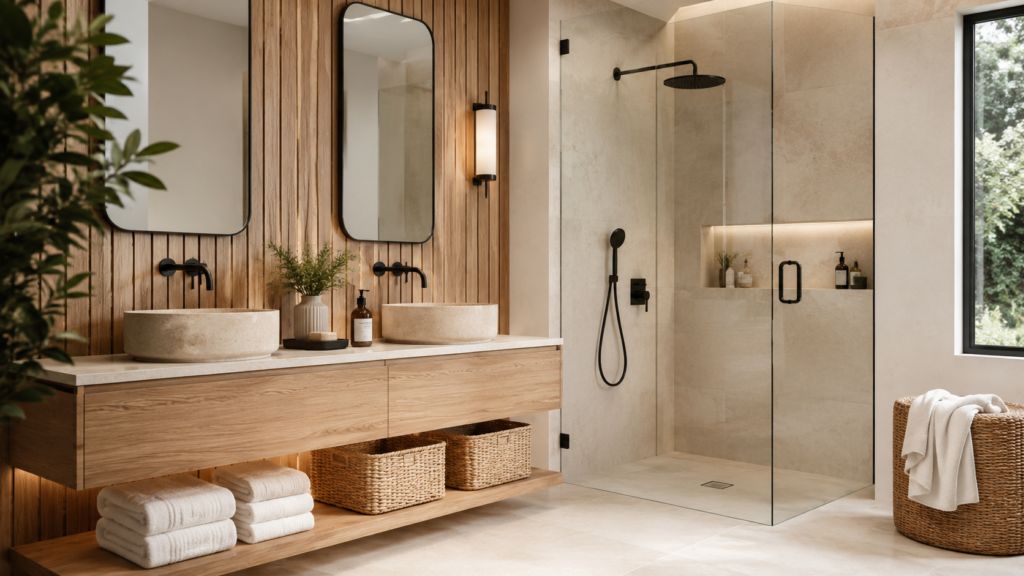
To soften cold bathroom surfaces and create a more organic, relaxing atmosphere.
Why It Works:
Bathrooms often contain tile, glass, metal, and stone. Wood balances those hard surfaces and makes the room feel warmer.
Key Features:
- Oak, walnut, teak, or wood-look materials
- Neutral tile
- Woven baskets
- Simple greenery
- Matte or brushed fixtures
Detailed Explanation:
Wood works best when it is used intentionally, not everywhere. A wood vanity, open shelf, stool, or framed mirror can be enough. For wet areas, use moisture-resistant finishes and avoid untreated wood. Teak is popular for shower benches because it handles moisture better than many woods, while oak and walnut work well for vanities when properly sealed.
Color combinations can include oak with cream, walnut with white, or light wood with sage green. Add woven baskets under open shelving for storage. Keep towels simple so the wood remains the main warm element.
Best For:
Spa bathrooms, modern organic bathrooms, neutral bathrooms, and cold white bathrooms needing warmth.
Designer Tip:
Designers use wood to create contrast against stone and tile, which makes both materials look richer.
Common Mistake To Avoid:
Do not place unsealed wood where water pools. Choose sealed wood, teak, or wood-look porcelain in wet zones.
Maintenance Level:
Medium Maintenance. Wood needs ventilation and occasional care to prevent water damage.
Estimated Budget:
$300–$2,500 for shelves, stools, or mirror upgrades; $1,500–$6,000+ for a wood vanity.
Design a Walk-In Shower With a Built-In Niche
Purpose:
To make the shower feel cleaner, more organized, and more expensive.
Why It Works:
A built-in niche removes bottle clutter from the floor and ledges. It also gives the shower a custom architectural detail.
Key Features:
- Recessed shower niche
- Frameless glass
- Rain shower head
- Handheld shower
- Proper slope and waterproofing
Detailed Explanation:
A walk-in shower works best when storage is planned before tile installation. A niche should be tall enough for real shampoo bottles, not just decorative products. In larger showers, consider two niches: one at standing height and one lower for shaving or bath products.
Use the same tile inside the niche for a quiet luxury look, or a slightly different tile for subtle contrast. Add a shower bench only if there is enough space to move comfortably. Lighting matters here too. A wet-rated recessed light makes the shower feel safer and more polished.
Best For:
Primary bathrooms, guest bathrooms, aging-in-place updates, and shower-only layouts.
Designer Tip:
A niche looks most elegant when it lines up with grout lines or other architectural features.
Common Mistake To Avoid:
Do not install a niche without proper waterproofing. Poor waterproofing can cause long-term moisture problems.
Maintenance Level:
Medium Maintenance. Glass needs regular cleaning, and grout should be maintained.
Estimated Budget:
$2,500–$10,000 for shower upgrades; $12,000–$35,000+ for a full shower remodel.
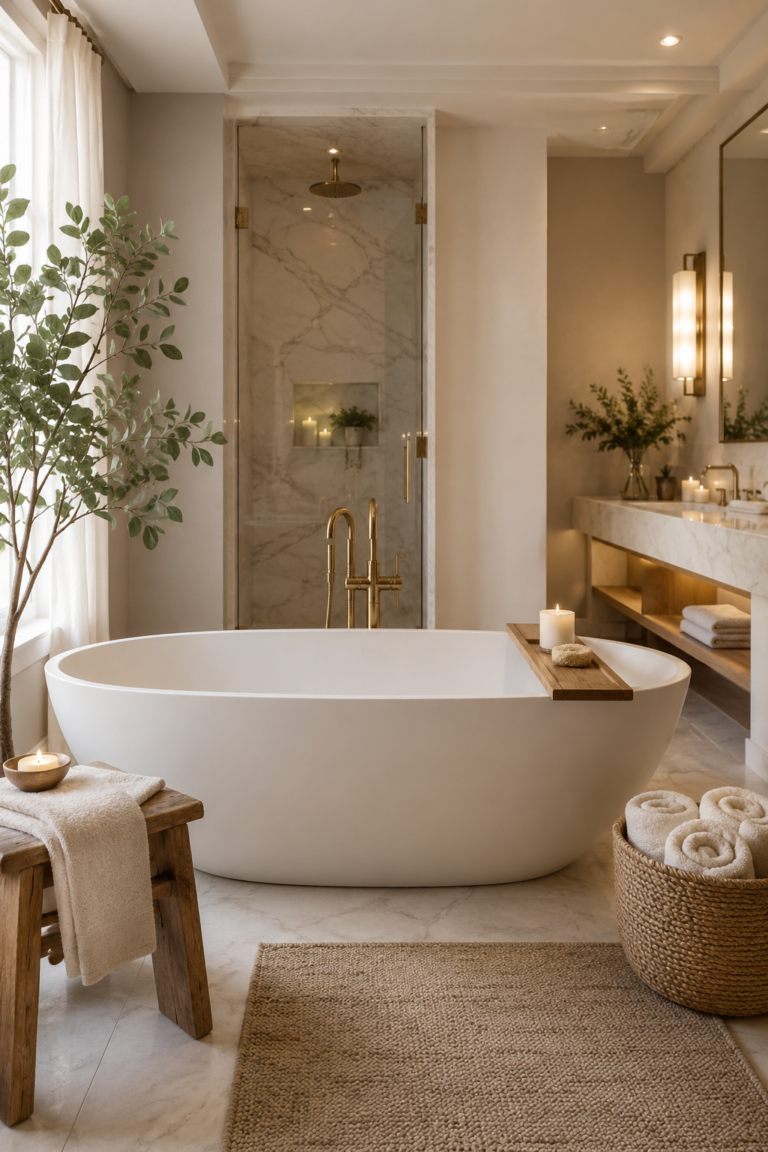
Add a Freestanding Tub as a Sculptural Feature
Purpose:
To create a relaxing focal point that makes the bathroom feel more like a private retreat.
Why It Works:
A freestanding tub adds shape, softness, and visual luxury. It can turn a plain bathroom into a spa-inspired space.
Key Features:
- Freestanding soaking tub
- Floor-mounted or wall-mounted tub filler
- Soft window treatment
- Side table or stool
- Warm tile or stone floor
Detailed Explanation:
A freestanding tub works best in medium to large bathrooms with enough clearance around the tub for cleaning and movement. It should not be forced into a tight room. In smaller bathrooms, an alcove tub with beautiful tile may be more practical.
For a calm palette, pair a white tub with beige stone tile, warm wood, and brushed nickel or brass fixtures. A small stool beside the tub is useful for towels, candles, or bath products. If privacy allows, natural light near the tub creates a beautiful luxury effect.
Best For:
Primary bathrooms, larger ensuites, and homeowners who genuinely enjoy baths.
Designer Tip:
Designers treat freestanding tubs like sculpture, so the space around the tub matters as much as the tub itself.
Common Mistake To Avoid:
Do not add a freestanding tub just for looks if nobody uses it. It takes space and can become wasted square footage.
Maintenance Level:
Medium Maintenance. Cleaning around the tub requires enough clearance.
Estimated Budget:
$1,200–$6,000 for the tub and filler; $5,000–$20,000+ with plumbing and flooring work.
Use Elegant Storage That Looks Built-In
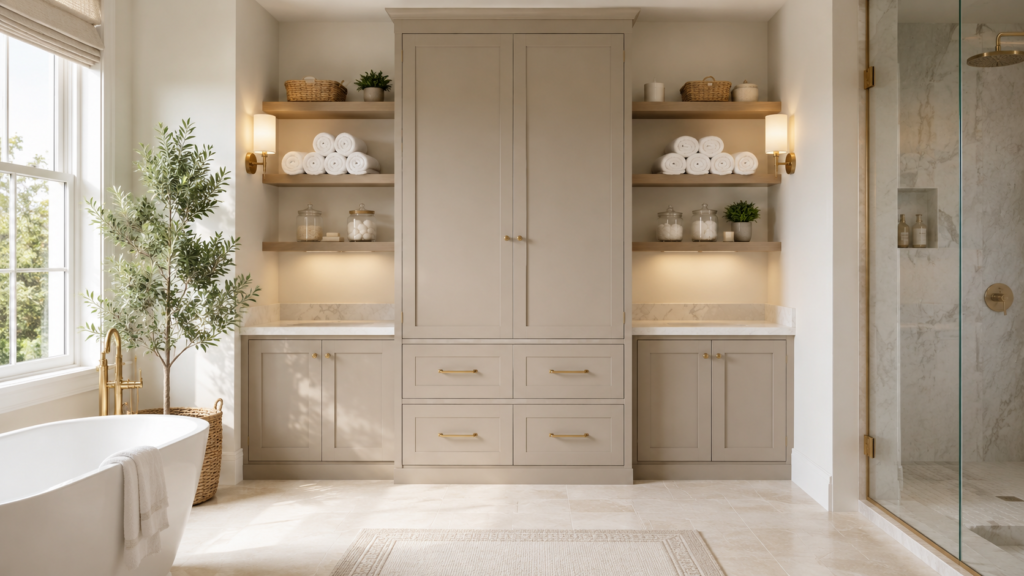
Purpose:
To reduce clutter and make the bathroom feel calm, organized, and high-end.
Why It Works:
Luxury bathrooms are rarely crowded with visible products. Storage allows the beautiful materials and decor to stand out.
Key Features:
- Linen cabinet
- Drawer organizers
- Floating shelves
- Baskets
- Closed storage for products
Detailed Explanation:
Good storage is one of the biggest differences between a pretty bathroom and a practical luxury bathroom. Use drawers for daily items, cabinets for towels, and baskets for extra paper goods or hair tools. If space allows, add a tall linen cabinet in the same finish as the vanity.
In small bathrooms, use recessed medicine cabinets, wall-mounted cabinets, or floating shelves above the toilet. Keep shelves styled lightly: towels, one plant, one jar, and one decorative object are enough. Too many items make the bathroom look busy.
Best For:
Family bathrooms, shared bathrooms, small bathrooms, and primary bathrooms with many products.
Designer Tip:
Designers hide the everyday clutter and display only the items that improve the room visually.
Common Mistake To Avoid:
Do not use open shelves for everything. Open shelves look messy when packed with daily products.
Maintenance Level:
Low Maintenance. Closed storage reduces dust and makes cleaning easier.
Estimated Budget:
$150–$1,000 for organizers and shelving; $1,500–$8,000+ for built-in cabinetry.
Mix Metals Carefully for a Custom Look
Purpose:
To create depth and a more collected designer look without making the bathroom feel mismatched.
Why It Works:
A bathroom with only one metal can look safe but flat. Carefully mixed metals add contrast and make the design feel custom.
Key Features:
- Two main metal finishes
- One dominant finish
- Repeated accent finish
- Simple hardware shapes
- Balanced color palette
Detailed Explanation:
The safest method is to choose one dominant metal and one accent metal. For example, use polished nickel for faucets and shower fixtures, then brushed brass for sconces and cabinet hardware. Or use matte black for mirrors and shower frames, then chrome or nickel for plumbing fixtures.
Keep the shapes similar. If your faucet is sleek and modern, choose modern hardware too. Avoid mixing too many finishes in a small bathroom. Two metals are usually enough. The rest of the palette should stay calm with neutral tile, wood, or stone.
Best For:
Bathrooms that feel too plain, builder-grade, or overly matched.
Designer Tip:
Designers repeat each metal at least twice so the mix feels intentional instead of accidental.
Common Mistake To Avoid:
Do not combine three or four finishes randomly. It can make the room look chaotic.
Maintenance Level:
Low Maintenance. Choose finishes that resist fingerprints and water spots when possible.
Estimated Budget:
$200–$1,500 for hardware and lighting updates; $2,000–$7,000+ if faucets and shower fixtures are replaced.
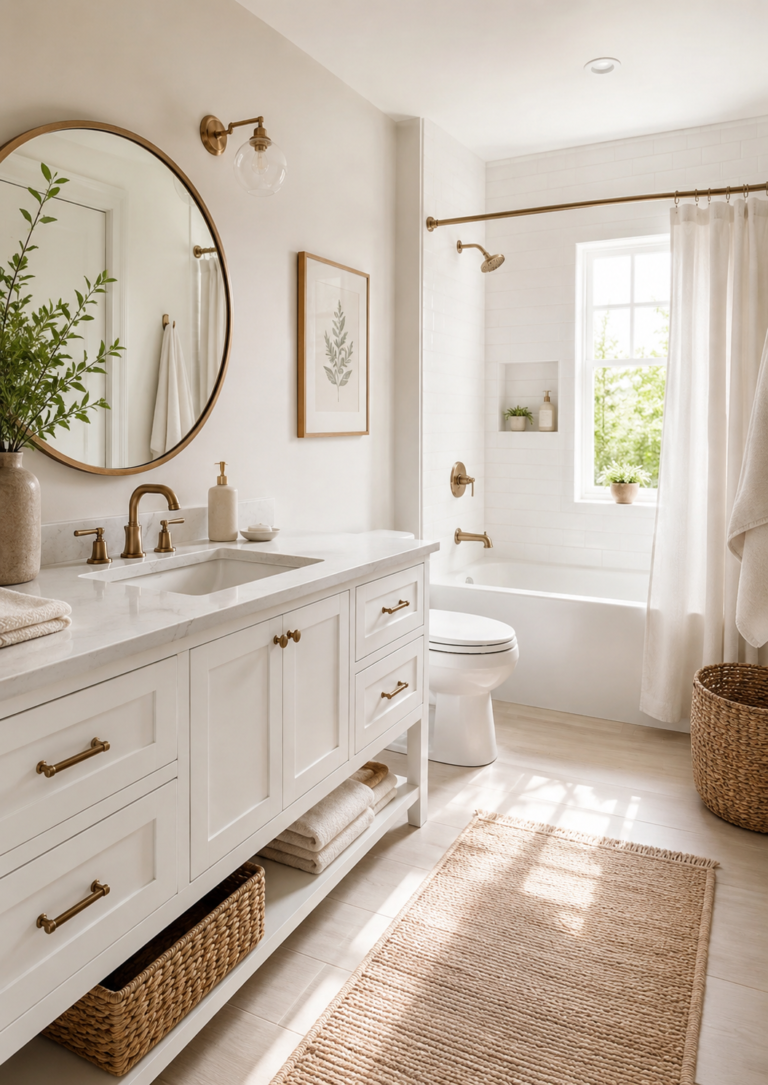
Style the Bathroom With Soft Luxury Accessories
Purpose:
To finish the bathroom with comfort, texture, and personality without major renovation.
Why It Works:
Accessories are the easiest way to make a bathroom feel fresh. They soften hard surfaces and make the space feel cared for.
Key Features:
- Plush towels
- Stone or ceramic tray
- Glass dispensers
- Linen shower curtain
- Small plant or flowers
Detailed Explanation:
This is the best idea for renters or homeowners who want a quick transformation. Start with towels in white, cream, taupe, sage, or charcoal. Add a tray on the vanity to group soap, lotion, and a small candle. Replace a plastic shower curtain with a waffle, linen, or cotton curtain.
A small plant can add life, but choose one that handles humidity and available light. Pothos, snake plant, and peace lily can work depending on conditions. Keep decor minimal. Luxury styling should feel useful, not crowded.
Best For:
Renters, budget updates, guest bathrooms, and bathrooms that need a fast refresh.
Designer Tip:
A common designer trick is to repeat one color three times, such as in towels, artwork, and a vase.
Common Mistake To Avoid:
Do not cover every surface with decor. Bathrooms need breathing room to feel clean and elegant.
Maintenance Level:
Low Maintenance. Wash textiles regularly and wipe trays to prevent water marks.
Estimated Budget:
$75–$600 for towels, trays, dispensers, plants, art, and shower curtains.
Professional Designer Advice for a Luxury Bathroom
Plan the Layout Before Choosing Finishes
A beautiful tile cannot fix a poor layout. Before choosing colors or fixtures, think about how the bathroom works. Can two people move comfortably? Is the vanity too close to the toilet? Does the shower door swing safely? Luxury begins with ease of movement.
Balance Task Lighting and Mood Lighting
Good bathroom lighting should help you see clearly and relax. Use mirror lighting for grooming, ceiling lighting for general brightness, and accent lighting for atmosphere. Dimmers are one of the most practical upgrades because they let the bathroom shift from morning function to evening calm.
Respect Scale
Oversized mirrors, large vanities, and dramatic tubs look beautiful only when the room can handle them. In small bathrooms, choose slim vanities, wall-mounted storage, and clear glass. In larger bathrooms, use rugs, stools, plants, and lighting to prevent the room from feeling empty.
Use Color Harmony
A fresh luxury bathroom usually works best with one main color, one supporting color, and one accent. For example: cream walls, oak vanity, and brass hardware. Or white tile, walnut vanity, and matte black accents. Too many colors can make the room feel less expensive.
Choose Materials for Moisture
Bathrooms need materials that handle humidity, splashes, and cleaning. Porcelain tile, ceramic tile, quartz, sealed wood, glass, and bathroom-rated paint are practical choices. Natural stone can be beautiful, but it often needs more care.
Think About Long-Term Durability
A bathroom should still feel good five years from now. Choose timeless fixed finishes for expensive items such as tile, countertops, tubs, and vanities. Use trendy colors in towels, artwork, rugs, or small accessories that are easy to change later.
Common Luxury Bathroom Mistakes to Avoid
1. Choosing Beauty Over Function
This happens when homeowners fall in love with a photo without thinking about daily life. A better approach is to ask: Where will towels go? Is there enough counter space? Is the floor safe when wet?
2. Using Harsh Cool Lighting
Bright blue-white lighting can make skin, tile, and paint look cold. Use warm white bulbs and layered fixtures for a softer, more flattering effect.
3. Installing Too Much Open Storage
Open shelves look beautiful in photos but can become cluttered quickly. Mix open styling with closed storage so daily products stay hidden.
4. Ignoring Ventilation
Luxury bathrooms still need strong ventilation. Without it, moisture can damage paint, wood, grout, and cabinets. Use a properly sized exhaust fan and open windows when possible.
5. Picking Slippery Floor Tile
Some polished tiles are not ideal for wet floors. Always check slip resistance and choose bathroom-safe flooring.
6. Mixing Too Many Finishes
Gold, black, chrome, bronze, and nickel in one small bathroom can feel messy. Choose one main finish and one accent finish.
7. Forgetting the Shower Details
A shower needs storage, lighting, drainage, and easy cleaning. A beautiful shower without a niche or shelf becomes frustrating fast.
8. Buying a Vanity Without Measuring
A vanity that is too deep or wide can ruin movement. Measure door swings, toilet clearance, and walking space before buying.
9. Using Cheap Accessories With Expensive Finishes
Plastic bottles, thin towels, and mismatched bath mats can weaken a luxury design. Upgrade the visible details for a more polished look.
Luxury Bathroom Budget Guide
Budget Friendly: $100–$2,500
This level is best for renters, small bathrooms, or quick cosmetic updates. Focus on mirrors, towels, lighting, paint, shower curtains, dispensers, trays, baskets, and artwork. You can create a fresh luxury feel without moving plumbing or replacing tile.
Best upgrades:
- New mirror
- New sconces or vanity light
- Plush towels
- Matching accessories
- Peel-and-stick or framed artwork
- Better storage baskets
Mid Range: $2,500–$15,000
This range can include a new vanity, faucet upgrades, improved lighting, partial tile work, new shower glass, better storage, or a refreshed tub/shower area. It is ideal when the existing layout works but the finishes feel dated.
Best upgrades:
- Vanity replacement
- Quartz countertop
- New faucets
- Large-format tile in one area
- Frameless shower glass
- Built-in storage
Luxury: $15,000–$50,000+
This level is for larger bathroom remodels, primary bathrooms, custom cabinetry, full tile installation, freestanding tubs, walk-in showers, heated floors, natural stone, and plumbing changes. Costs rise quickly when walls, plumbing, electrical work, or custom materials are involved.
Best upgrades:
- Full walk-in shower
- Custom double vanity
- Heated floors
- Freestanding tub
- Stone or slab-look surfaces
- Layered lighting plan
- Built-in linen storage
Conclusion
A fresh and elegant bathroom does not need to look like everyone else’s bathroom. The best luxury bathroom decor ideas are the ones that improve how your space feels and how it works every day.
If your bathroom is small, start with warm lighting, a better mirror, large-looking surfaces, and smarter storage. If your bathroom feels cold, bring in wood, soft towels, warmer neutrals, and natural texture. If you are planning a bigger remodel, invest in the features that are hardest to change later: layout, tile, vanity, lighting, ventilation, and waterproofing.
The most beautiful bathrooms have restraint. They do not shout for attention. They feel calm when you walk in, practical when you use them, and polished when everything is put away. Choose the ideas that fit your space, your budget, and your routine. With the right mix of comfort, material, lighting, and organization, your bathroom can become one of the most refreshing rooms in your home.