8 Bedroom Door Design Ideas in the Modern Era
A Bedroom Door Design is one of those design details people often ignore until the whole room feels almost finished. The bed is styled, the curtains are hung, the rug is in place, and the wall color looks beautiful. Then you step back and notice the door: flat, builder-grade, scratched, hollow, noisy, or completely disconnected from the rest of the room.
That one detail can quietly weaken the whole bedroom.
A Bedroom Door Design is not just something you open and close. It affects privacy, sound, light, movement, wall balance, and the first impression of the room. It also sets the tone before anyone even enters. A well-designed bedroom door can make a simple room feel more architectural, more peaceful, and more expensive without changing the entire layout.
In the modern era, bedroom door design has become much more thoughtful. Homeowners are looking beyond basic white hollow-core doors. They want solid-core doors for privacy, wood finishes for warmth, fluted glass for soft light, hidden doors for clean walls, pocket doors for small spaces, and hardware that feels as good as it looks.
The best bedroom door design ideas are not just beautiful. They solve real problems. A sliding door can save floor space. A solid-core door can make a room feel quieter. A painted door can create a stronger focal point. A reeded glass door can brighten a dressing area while still offering privacy. A full-height door can make ceilings look taller.
These 8 bedroom door design ideas in the modern era are made for real homes, not impossible showroom concepts. Each idea uses materials, finishes, and layouts that exist in the market today and can improve beauty, function, comfort, privacy, maintenance, or property value.
Quick Wins for a Better Bedroom Door Design
- Upgrade the handle first. A solid lever or knob in matte black, brushed brass, bronze, or polished nickel can make even a simple door feel more expensive.
- Paint the door intentionally. Try warm white, greige, taupe, charcoal, sage, olive, or soft black instead of leaving it as a forgotten surface.
- Add matching hinges. Door hardware looks more polished when the hinges and handle finish work together.
- Improve the trim. Fresh casing, clean caulk lines, and crisp paint can make the door look custom.
- Check the swing clearance. A beautiful door is not successful if it hits the bed, wardrobe, nightstand, or rug.
Featured Snippet Questions
What is the best bedroom door design for a modern home?
The best modern bedroom door design depends on the room size and privacy needs. Solid-core flush doors, shaker panel doors, wood veneer doors, pocket doors, and fluted glass doors are all practical options. For most bedrooms, a solid-core door with quality hardware offers the best mix of style, privacy, and durability.
Which Bedroom Door Design is best for privacy?
A solid-core Bedroom Door Design is usually better for privacy than a hollow-core door because it feels heavier and helps reduce sound transfer. A good seal, proper installation, and quality latch also matter. For maximum privacy, avoid clear glass doors unless they are used for closets, dressing rooms, or secondary bedroom zones.
Are sliding doors good for bedrooms?
Sliding doors can work well for bedrooms when space is limited or when a swing door blocks furniture placement. Pocket doors and wall-mounted sliding doors save floor area. However, they must be installed properly, and they may not provide the same sound privacy as a well-fitted solid-core hinged door.
What color should Bedroom Door Design be?
Bedroom Door Design can match the wall color for a seamless look or contrast with the walls for a stronger design statement. Warm white, soft black, taupe, mushroom, sage green, olive, charcoal, and natural wood are modern choices. The best color should connect with the trim, flooring, furniture, and overall bedroom palette.
How can I make a cheap Bedroom Door Design look expensive?
Upgrade the handle, paint the door in a designer color, add clean trim, replace visible hinges, and style the surrounding wall. If the door is flat, you can add simple molding for a panel effect. A neat finish often matters more than expensive materials, especially in small bedrooms.
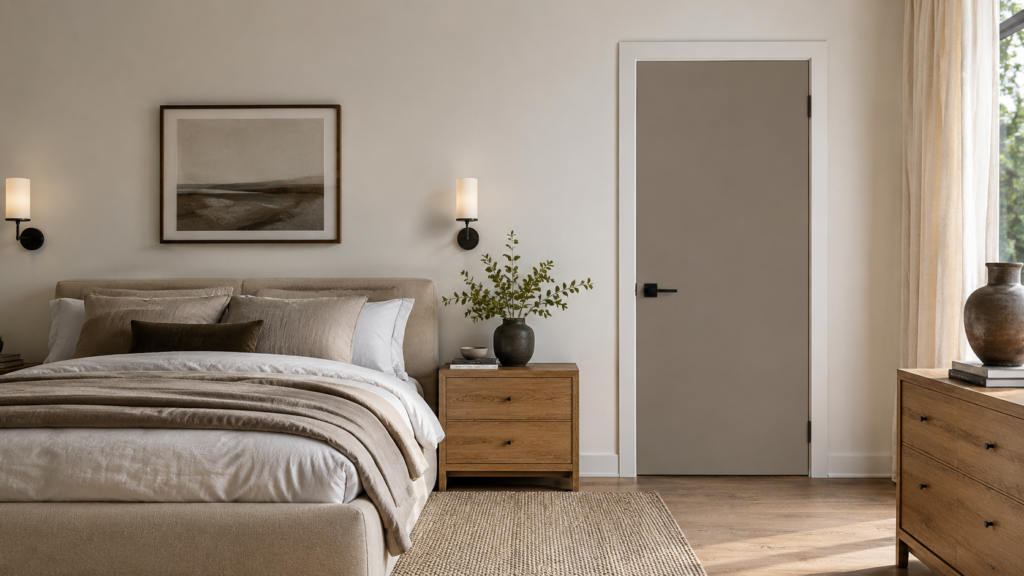
Solid-Core Flush Bedroom Door Design
Purpose:
To create a clean, quiet, and modern bedroom entrance with better privacy.
Why It Works:
A flush door has a flat surface, so it feels simple and architectural. When upgraded to a solid-core version, it also feels heavier, more private, and more premium than a lightweight hollow door.
Key Features:
- Smooth flat door surface
- Solid-core construction
- Minimal hardware
- Painted or wood veneer finish
- Clean modern trim
Detailed Explanation:
This idea works beautifully in modern, minimalist, Japandi, Scandinavian, and contemporary bedrooms. A flush door does not compete with bedding, artwork, or wall paneling. Instead, it creates a quiet backdrop. For small bedrooms, paint the door the same color as the wall to make the space feel larger. For larger bedrooms, a deeper shade like charcoal, olive, or mushroom can make the door feel intentional.
Use a lever handle with a clean profile. Matte black works well with modern interiors, while brushed nickel or brass feels warmer. Solid-core doors are practical for bedrooms because they improve the feeling of privacy and reduce the hollow sound many cheaper doors have.
Lighting should not be ignored. A wall sconce or soft hallway light near the door can make the entrance feel more finished.
Best For:
Modern bedrooms, apartments, guest rooms, and homeowners who want a clean, timeless look.
Designer Tip:
Designers often use flush doors when they want the wall, furniture, or artwork to be the main focus rather than the door itself.
Common Mistake To Avoid:
Do not choose a flat door and then ignore the hardware. Cheap handles can make the whole door look basic. Use solid hardware with a finish that matches the room.
Maintenance Level:
Low Maintenance. A smooth painted or veneer surface is easy to wipe, though darker paint may show fingerprints.
Estimated Budget (USD):
$250–$900 per door for standard materials and installation; $900–$2,500+ for premium solid-core, custom finish, or higher-end hardware.
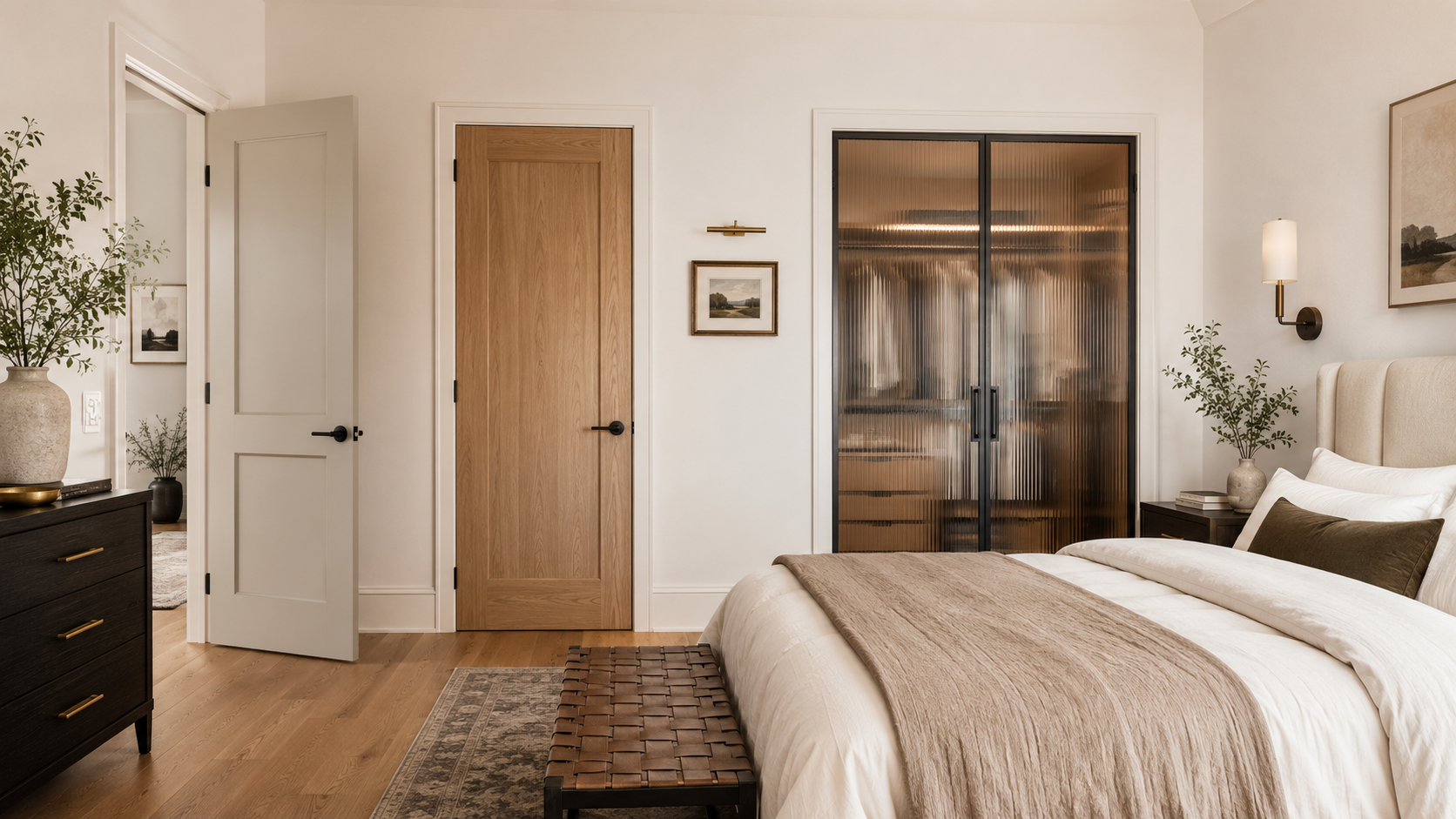
Natural Wood Veneer Bedroom Door Design
Purpose:
To bring warmth, texture, and a custom furniture-like feeling into the bedroom.
Why It Works:
Wood instantly softens a bedroom. A wood veneer door can make the room feel warmer and more expensive without needing heavy decoration.
Key Features:
- Oak, walnut, ash, or maple veneer
- Vertical or horizontal grain
- Simple modern hardware
- Natural matte finish
- Coordinated wood furniture
Detailed Explanation:
A wood Bedroom Door Design is ideal when the room feels too cold, white, or plain. Oak gives a light, calm look. Walnut feels richer and more luxurious. Ash and maple work well for soft modern interiors. The key is to connect the door to at least one other wood element in the room, such as nightstands, dresser, flooring, or picture frames.
For color combinations, use oak with warm white and sage, walnut with cream and brass, or maple with soft gray and linen. Avoid mixing too many unrelated wood tones. If the floor is already strong, choose a door finish that complements it rather than fights with it.
This door style works in medium and large bedrooms, but it can also elevate a small room when the rest of the palette stays simple.
Best For:
Warm modern bedrooms, Japandi interiors, luxury bedrooms, and rooms needing natural texture.
Designer Tip:
One thing that always stands out with wood doors is grain direction. Vertical grain can make the door feel taller, while horizontal grain feels wider and more contemporary.
Common Mistake To Avoid:
Do not choose a wood door without comparing it to your floor. Two clashing wood tones can make the room feel poorly planned.
Maintenance Level:
Medium Maintenance. Wood veneer needs gentle cleaning and protection from deep scratches and excess moisture.
Estimated Budget (USD):
$400–$1,500 per door installed; $1,500–$4,000+ for custom veneer, premium hardware, or full-height designs.
Fluted Glass Bedroom Door Design for Dressing Areas
Purpose:
To allow light to pass through while still creating softness and partial privacy.
Why It Works:
Fluted or reeded glass diffuses light and blurs views. It is especially useful for dressing rooms, closets, ensuite entries, or bedroom sitting areas where full privacy is not the main concern.
Key Features:
- Fluted or reeded glass
- Black, brass, wood, or white frame
- Soft light diffusion
- Modern boutique look
- Privacy without complete darkness
Detailed Explanation:
A fluted glass door is not always the best choice for the main bedroom entry if privacy is the priority. But it can be excellent between a bedroom and walk-in closet, dressing room, office nook, or ensuite vanity area. It adds texture without making the room feel heavy.
Use black metal frames for a modern look, brass for a warmer luxury feel, or wood frames for a softer organic style. Pair it with warm white walls, oak furniture, linen bedding, and soft sconces. The glass looks especially beautiful when light passes through it from the other side.
In small bedrooms, fluted glass can help borrowed light move through the space. In larger bedrooms, it adds a boutique-hotel detail.
Best For:
Walk-in closets, dressing areas, ensuite zones, modern bedrooms, and rooms needing more light.
Designer Tip:
Designers often use textured glass when they want privacy and light at the same time, but not a fully transparent view.
Common Mistake To Avoid:
Do not use clear glass for a Bedroom Door Design unless privacy is not needed. Choose fluted, frosted, ribbed, or laminated privacy glass instead.
Maintenance Level:
Medium Maintenance. Glass needs regular wiping, especially around handles and fingerprints.
Estimated Budget (USD):
$600–$2,500 installed for standard fluted glass doors; $2,500–$6,000+ for custom metal or oversized designs.
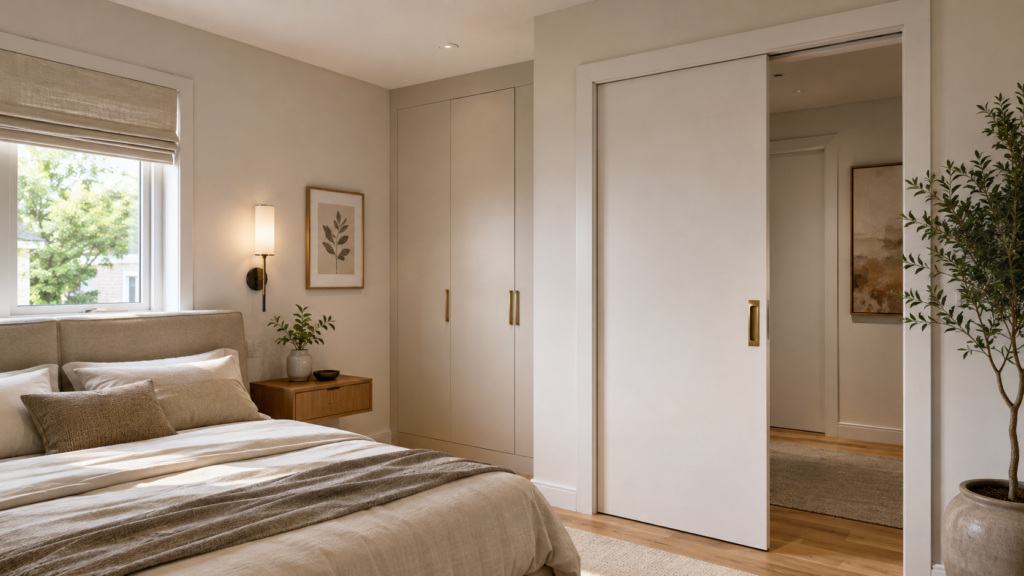
Space-Saving Pocket Bedroom Door Design
Purpose:
To save floor space and improve furniture placement in compact bedrooms.
Why It Works:
A pocket door slides into the wall instead of swinging into the room. This can free up space for a bed, wardrobe, desk, or nightstand.
Key Features:
- Door slides into wall cavity
- Flush pull hardware
- Clean trim
- Smooth track system
- Space-saving layout
Detailed Explanation:
Pocket doors are very useful in small bedrooms, closet entries, ensuite bathrooms, and tight hallway layouts. They can solve the common problem of a door hitting furniture or blocking a wardrobe. For a clean modern look, paint the door the same color as the wall or use a simple wood finish.
The biggest design consideration is the wall itself. A pocket door needs room inside the wall cavity, so it may not work where plumbing, electrical wiring, or structural framing is in the way. This is why pocket doors are easiest to plan during renovation or new construction.
Lighting near the entry matters. A small ceiling light, hallway sconce, or soft bedroom lamp can highlight the clean doorway.
Best For:
Small bedrooms, ensuite bathrooms, closets, apartments, and rooms with difficult door swings.
Designer Tip:
Designers often use pocket doors when every inch matters, especially in compact bedroom suites.
Common Mistake To Avoid:
Do not install a pocket door with cheap hardware. Poor tracks can stick, rattle, or become frustrating over time. Invest in a quality system.
Maintenance Level:
Medium Maintenance. Tracks and rollers may need occasional adjustment or cleaning.
Estimated Budget (USD):
$700–$2,500 for standard installation; $2,500–$6,000+ if walls need major modification.
Modern Shaker Panel Bedroom Door Design
Purpose:
To add subtle detail and timeless structure without making the bedroom feel overly traditional.
Why It Works:
Shaker panel doors are simple, familiar, and versatile. They work with modern farmhouse, transitional, coastal, classic, and contemporary bedrooms.
Key Features:
- One-panel, two-panel, or five-panel style
- Painted finish
- Quality lever or knob
- Crisp trim
- Works with many interiors
Detailed Explanation:
A shaker door is a safe choice when you want detail but not decoration that feels heavy. A two-panel shaker door can look clean and modern. A five-panel door feels slightly more classic. For a fresh look, paint it warm white, greige, mushroom, sage, navy, charcoal, or soft black.
This door style works in almost any room size. In small bedrooms, use a lighter color so the door does not dominate. In larger bedrooms, a darker painted door can create contrast and depth.
Pair shaker doors with simple hardware. Brushed brass warms the look, polished nickel feels classic, and matte black feels modern. Keep trim lines crisp so the door looks finished.
Best For:
Transitional bedrooms, family homes, guest rooms, and homeowners wanting timeless appeal.
Designer Tip:
Designers often choose shaker doors because they add enough detail to look finished but still adapt to many decor styles.
Common Mistake To Avoid:
Do not pair a detailed door with messy trim or chipped paint. Panel doors only look elegant when the finish is clean.
Maintenance Level:
Low to Medium Maintenance. Panels collect a little dust, but painted doors are easy to touch up.
Estimated Budget (USD):
$250–$900 installed for standard options; $900–$2,000+ for solid-core or custom painted versions.
Hidden Wall-Matched Bedroom Door
Purpose:
To create a seamless wall effect that makes the bedroom feel calm, modern, and architectural.
Why It Works:
A hidden or wall-matched door reduces visual interruptions. It is especially effective in minimalist bedrooms or rooms with strong wall paneling.
Key Features:
- Door painted same color as wall
- Concealed or minimal hinges
- Slim handle
- Flush installation
- Clean baseboard and trim detail
Detailed Explanation:
This idea works best when you want the bedroom to feel serene and uncluttered. The door can be painted the same color as the wall, covered in matching paneling, or designed with minimal trim so it almost disappears. It is especially beautiful in warm white, soft beige, plaster-like finishes, taupe, or deep charcoal.
A hidden door can help small bedrooms because fewer visual breaks make the wall feel longer. In large bedrooms, it creates a high-end architectural effect. The furniture should stay simple so the seamless look feels intentional.
Lighting should be soft and indirect. Recessed lights, wall washers, and lamps can highlight the wall without making the door stand out too much.
Best For:
Minimalist bedrooms, luxury suites, small rooms, and homes with wall paneling.
Designer Tip:
Designers often hide doors when they want the bed wall, art, or architectural paneling to remain the main focus.
Common Mistake To Avoid:
Do not use a hidden door where the wall and door finishes do not match cleanly. Even a slight paint mismatch can ruin the effect.
Maintenance Level:
Low Maintenance. Smooth surfaces are easy to wipe, but touch-ups must match perfectly.
Estimated Budget (USD):
$500–$1,500 for paint-matched upgrades; $2,000–$8,000+ for concealed frames, paneling, or custom flush systems.
Arched Bedroom Door Design
Purpose:
To soften the bedroom entrance and create a more custom architectural feeling.
Why It Works:
An arch adds curve and softness to a room filled with straight furniture lines. It can make a bedroom feel more romantic, Mediterranean, modern classic, or boutique-inspired.
Key Features:
- Arched top door or arched opening
- Wood or painted finish
- Brass or bronze hardware
- Soft wall colors
- Curved decor details
Detailed Explanation:
Arched doors work best when the architecture supports them. They are easier in new construction or major renovations, but an arched opening can also be added in some remodels depending on wall conditions. For a smaller update, use an arched doorway trim or arched molding detail rather than changing the whole structural opening.
Color combinations can include cream plaster walls with natural oak, warm white with brass, sage with walnut, or soft clay with bronze. Repeat curves elsewhere through an arched mirror, round nightstand, curved lamp, or rounded headboard.
This idea suits medium and large bedrooms best because arches need space to feel graceful.
Best For:
Mediterranean, modern classic, romantic, Spanish-inspired, and luxury bedrooms.
Designer Tip:
Designers often repeat the curve of an arched door in mirrors or furniture so the shape feels connected to the room.
Common Mistake To Avoid:
Do not add one random arch in a room with no other soft shapes. Repeat the curve at least once for balance.
Maintenance Level:
Medium Maintenance. The door itself is simple, but custom trim and curved edges need careful painting.
Estimated Budget (USD):
$1,000–$4,000 for arched door upgrades; $4,000–$12,000+ for custom arched openings or major framing work.
Statement Color Bedroom Door
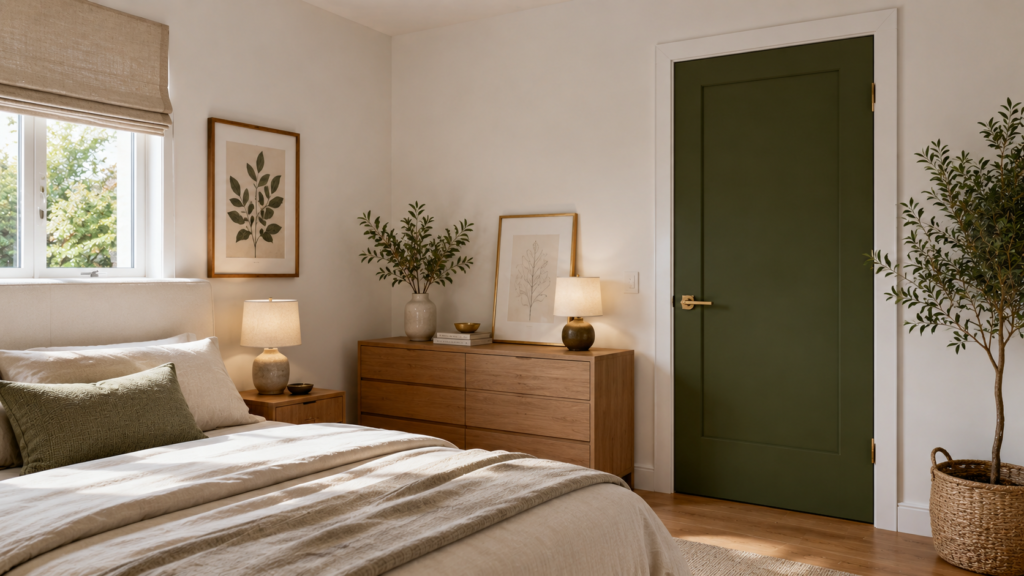
Purpose:
To turn the bedroom door into a stylish accent without replacing it completely.
Why It Works:
Paint is one of the most affordable ways to upgrade a door. A thoughtful color can make even a basic door feel designed.
Key Features:
- Deep or soft paint color
- Coordinated hardware
- Clean trim
- Matching decor accents
- Smooth painted finish
Detailed Explanation:
This idea is perfect when the door is in good condition but looks plain. Try soft black, olive green, sage, mushroom, taupe, navy, charcoal, clay, or warm gray. The color should connect to something in the bedroom, such as bedding, artwork, rug, or furniture.
For small bedrooms, choose a muted color rather than a very bright one. For larger bedrooms, deeper colors can add drama. If the walls are white, a painted door becomes a strong feature. If the walls are already colorful, choose a door color that is slightly darker or lighter within the same family.
Hardware matters. A brass handle on olive, black on taupe, or nickel on navy can look polished and intentional.
Best For:
Budget updates, rental-friendly inspiration, guest rooms, teen bedrooms, and quick makeovers.
Designer Tip:
Designers often repeat the door color in small accents so it feels like part of the design, not an afterthought.
Common Mistake To Avoid:
Do not paint without proper prep. Clean, sand lightly, prime if needed, and use durable enamel or trim paint for a smoother finish.
Maintenance Level:
Low Maintenance. Painted doors are easy to wipe and touch up.
Estimated Budget (USD):
$40–$200 for DIY paint and supplies; $200–$700+ if hiring a painter or replacing hardware.
Professional Designer Advice for Bedroom Door Design
Layout Planning
Before choosing a door style, study how the bedroom works. Does the door swing into a nightstand? Does it block a wardrobe? Does it hit the rug? Does it make the room feel cramped? A beautiful door should improve movement, not create daily frustration.
For small rooms, pocket doors, sliding doors, or wall-matched doors can help. For larger bedrooms, hinged doors, double doors, or arched doors can feel more substantial.
Lighting
Doors often sit in shadow, especially in hallways. Good lighting makes the entrance feel more intentional. Use a hallway sconce, soft ceiling light, or bedroom lamp near the entry. If the door has texture, such as panels or wood grain, side lighting can make the detail look richer.
Scale
Scale matters. A tall bedroom with a short-looking basic door can feel unfinished. A small room with an overly heavy door can feel cramped. Standard doors work well in many homes, but full-height, double, or arched doors need the right room size to look natural.
Balance
The door should connect to the rest of the bedroom. If the room has black metal lamps, a matte black handle can help. If the room has brass sconces, brass hardware may feel warmer. If the room has oak furniture, a wood door or oak-toned trim can create flow.
Color Harmony
Use the door as part of the color palette. It can match the wall for a seamless look, match the trim for a classic look, or contrast as a statement. Avoid choosing a random color that appears nowhere else in the room.
Material Selection
Bedroom doors are commonly available in hollow-core, solid-core, MDF, molded composite, wood veneer, solid wood, glass, and metal-framed options. For main bedroom entries, privacy and sound control matter. For closets and dressing areas, lighter or glass options may be more appropriate.
Long-Term Durability
Door quality matters because doors are touched every day. Invest in good hinges, solid hardware, durable paint, and a style that works with your home’s architecture. Trendy colors can be repainted, but poor installation or cheap hardware can become annoying quickly.
Common Bedroom Door Mistakes to Avoid
1. Ignoring Privacy
This happens when homeowners choose a door only for looks. Bedrooms need privacy, so main entry doors should feel solid and secure. Use glass only where privacy is not the priority.
2. Choosing Cheap Hardware
A beautiful door with a flimsy handle feels disappointing. Upgrade the handle, latch, and hinges for a more finished result.
3. Forgetting Door Swing
A door that hits furniture creates daily frustration. Check the swing before buying a bed, wardrobe, or nightstand.
4. Using the Wrong Paint Finish
Flat wall paint can scuff quickly on doors. Use durable trim, door, or enamel paint for a smoother, longer-lasting finish.
5. Mixing Too Many Finishes
Black hinges, brass handles, chrome lamps, and bronze curtain rods can look messy. Keep finishes connected.
6. Choosing a Style That Fights the Home
A very modern flush door may look odd in a traditional home unless other details are updated too. Choose a door that respects the architecture.
7. Forgetting Sound Control
Light hollow doors can feel noisy and less private. If sound matters, consider a solid-core door and proper installation.
8. Overlooking Trim
Old, damaged, or poorly painted trim can make a new door look less impressive. Refresh casing and baseboards at the same time.
9. Installing Sliding Doors Without Enough Wall Space
Wall-mounted sliding doors need clear wall area. If artwork, switches, or outlets are in the way, the layout may not work.
Bedroom Door Budget Guide
Budget Friendly: $40–$500
This level is best when the existing door is in good shape. Focus on paint, hardware, hinges, trim repair, and small styling changes.
Best upgrades:
- New lever or knob
- Fresh paint
- Matching hinges
- Clean trim and caulk
- Doorstop replacement
- Simple molding detail
Mid Range: $500–$2,500
This range allows for a new standard interior door, better material, professional installation, and upgraded hardware. Solid-core doors, shaker doors, and simple wood veneer options often fall into this category depending on size and labor.
Best upgrades:
- Solid-core door
- Shaker panel door
- Wood veneer slab
- Better casing
- Premium handle set
- Painted finish
Luxury: $2,500–$12,000+
This level is for custom doors, arched designs, full-height doors, pocket door systems, metal-framed glass doors, hidden doors, or architectural wall paneling. Costs rise when framing, electrical, trim, or wall modifications are needed.
Best upgrades:
- Custom wood door
- Concealed frame system
- Arched bedroom door
- Fluted glass door
- Pocket door installation
- Full wall panel integration
- Designer hardware
Conclusion
A bedroom door may seem like a small detail, but it has a surprising effect on how the room feels. It can make a bedroom quieter, warmer, more private, more modern, and more complete. The right door also helps the room feel intentional before anyone even steps inside.
Start with what your bedroom needs most. If privacy is the problem, choose a solid-core door. If the room feels cold, consider wood veneer. If space is tight, look at a pocket door. If the room feels plain, paint the door a beautiful statement color. If you want a luxury effect, explore hidden doors, arched designs, or fluted glass for secondary spaces.
The best modern bedroom door is not always the most expensive one. It is the one that fits the room, works smoothly every day, and connects with the rest of the design. When a door looks beautiful, feels solid, opens easily, and supports the mood of the bedroom, it becomes more than a passage. It becomes part of the home’s character.